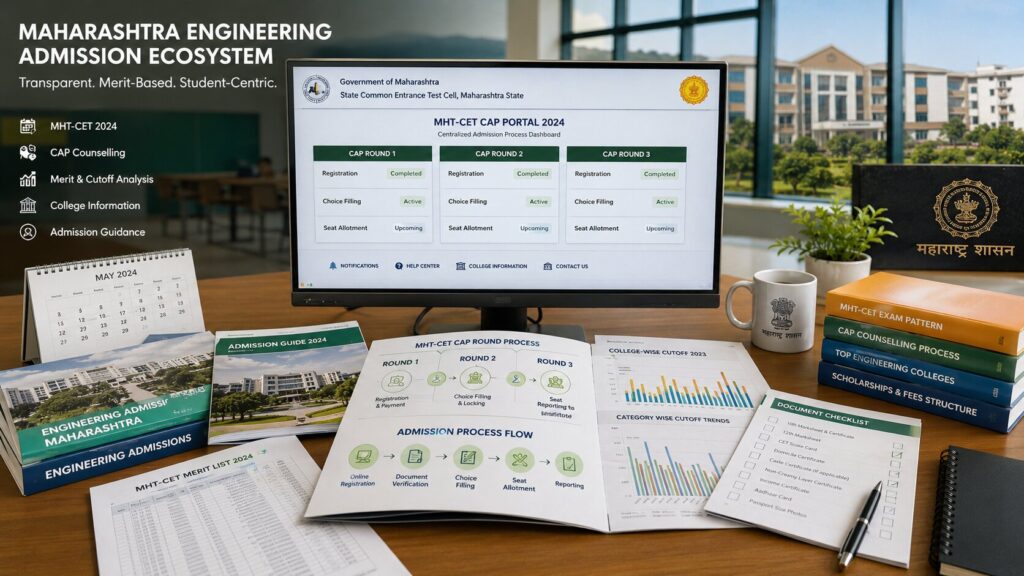
MHT-CET 2026 CAP Round Strategy: How to Fill Option Form Without Losing a Good Seat
The MHT-CET (Maharashtra Common Entrance Test) counselling process is one of the most important stages for engineering aspirants after receiving their examination results. Every year, thousands of students score good marks but fail to secure their preferred college or branch because they make mistakes while filling the CAP (Centralized Admission Process) option form.
Many candidates focus entirely on exam preparation but spend very little time understanding the counselling process. As a result, they either place unrealistic choices at the top, ignore backup options, or lock choices without proper research. The option form is not just a list of colleges—it is a strategic document that can determine your entire engineering journey.
Check Your College Admission Chances Now : CLICK HERE
If you are appearing for MHT-CET 2026 and planning to participate in CAP counselling, this detailed guide will help you fill your option form intelligently without losing a good seat.
Understanding MHT-CET CAP Counselling
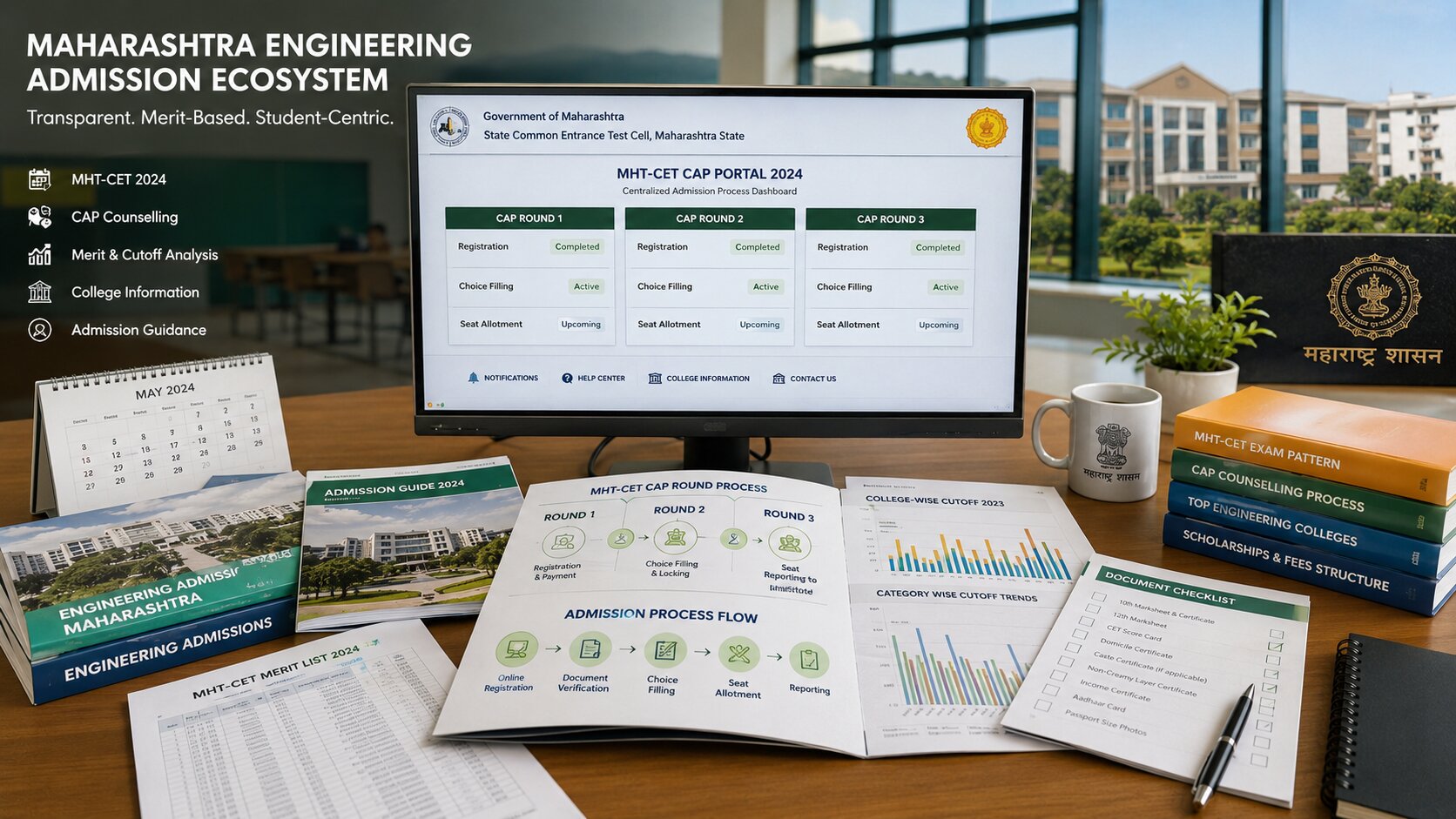
The Centralized Admission Process (CAP) is conducted for admission to engineering colleges across Maharashtra. Based on your merit rank, category, seat type, and preferences, seats are allotted through multiple counselling rounds.
Visit Official Website : CLICK HERE
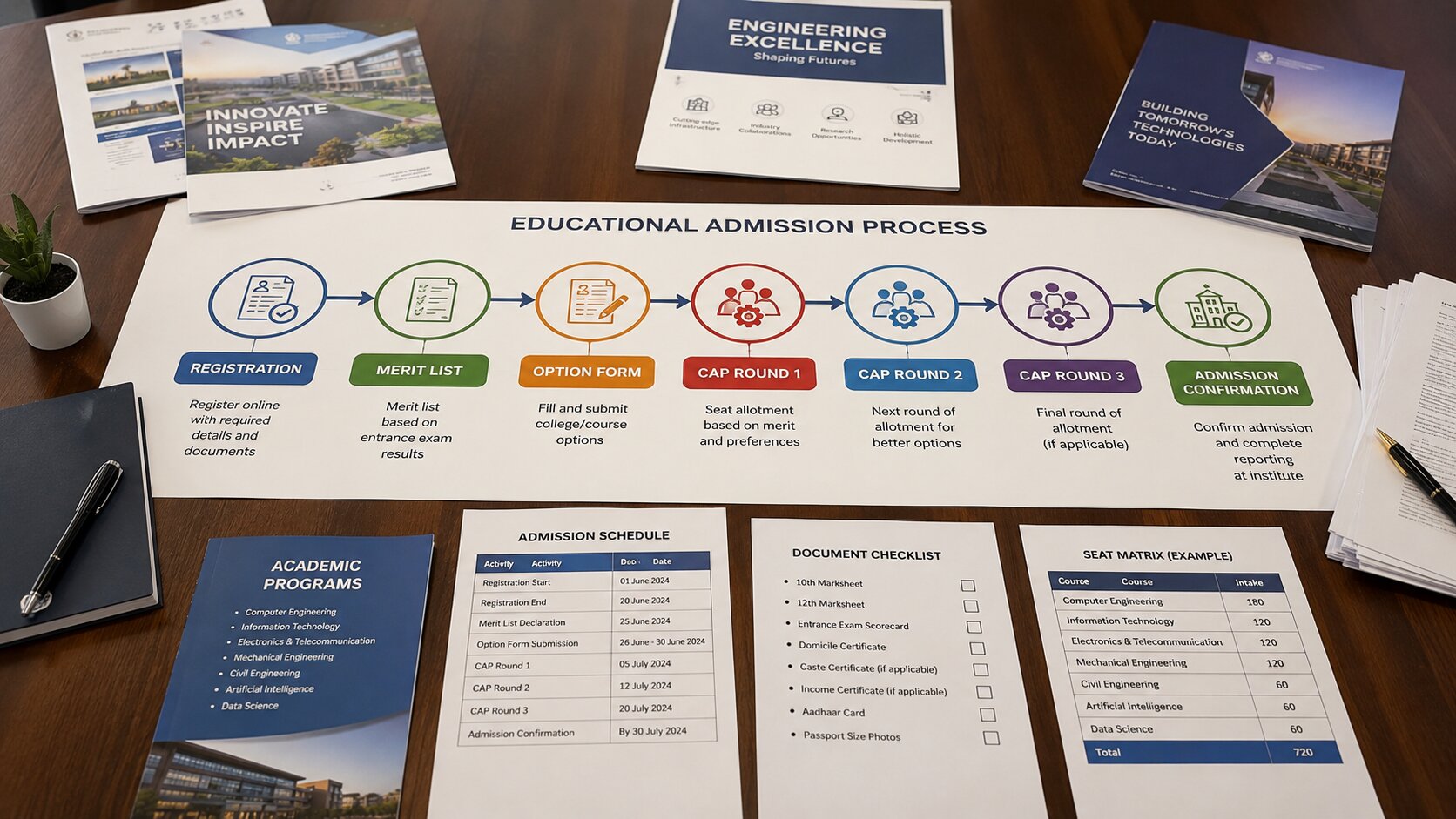
The admission process generally includes:
- Registration
- Document verification
- Merit list publication
- Option form filling
- Seat allotment rounds
- Seat acceptance and reporting
Among all these steps, the option form filling stage is where students have maximum control over their outcome.
Why Option Form Filling Is So Important
Many students believe that only rank matters during counselling. While rank is crucial, your option form determines which colleges and branches the system can allot to you.
Even a student with a lower rank can sometimes secure a better college if they fill preferences strategically, whereas a higher-ranked student may lose opportunities because of poor choice ordering.
Your option form should reflect:
- Dream colleges
- Realistic colleges
- Safe colleges
- Branch preferences
- Future career goals
A single mistake can lead to:
- Missing preferred branches
- Getting stuck in an unwanted college
- Losing upgrade opportunities
- Wasting a counselling round
How CAP Seat Allotment Works
The CAP system checks choices from top to bottom.
Suppose your option form is:
- COEP Pune – CSE
- VJTI Mumbai – IT
- PICT Pune – CSE
- SPIT Mumbai – CSE
- DJ Sanghvi – CSE

Know more information : CLICK HERE
The system will check whether your rank qualifies for Choice 1.
If not, it checks Choice 2.
If not, it moves to Choice 3 and so on.
The first available choice according to your rank and category gets allotted.
This is why the sequence of choices is extremely important.
Common Mistakes Students Make

1. Filling Too Few Choices
One of the biggest mistakes is filling only 20–30 options.
Students often think:
“I will get only top colleges.”
If cutoffs increase unexpectedly, they may remain without a seat.
Always fill a large number of options.
More choices mean:
- Better chances of allotment
- Reduced risk
- More upgrade opportunities
2. Ignoring Previous Year Cutoffs
Many candidates fill colleges based on popularity rather than data.
Always analyze:
- Round 1 cutoff
- Round 2 cutoff
- Round 3 cutoff
- Institute-level cutoff
Past trends provide realistic expectations.
While cutoffs change every year, they remain the best reference point.
3. Following Friends
Your friend may prefer:
- Mechanical Engineering
- Electronics
- Civil Engineering
But your career goals may be completely different.
Never copy another student’s option form.
Create your own list according to:
- Interest
- Placement goals
- Location preference
- Budget
4. Keeping Backup Options Too Low
Many students add safety colleges only at the bottom of the list.
Instead, structure choices properly:
- Dream options
- Target options
- Safe options
This improves allotment chances significantly.
The Ideal Option Form Structure
Experts generally recommend dividing choices into three categories.

Category 1: Dream Choices (20–30%)
These are colleges where your chances are low but possible.
Examples:
- COEP
- VJTI
- SPIT
- PICT
- Walchand
Even if cutoff is above your rank, include these choices.
You lose nothing by trying.
Category 2: Realistic Choices (50–60%)
These should form the largest portion of your option form.
These are colleges where:
- Previous cutoffs are near your rank
- Admission probability is reasonable
Most students eventually receive allotments from this section.
Category 3: Safe Choices (20–30%)
These are colleges where previous cutoffs are comfortably below your rank.
Safe options ensure that you secure a seat even if cutoffs fluctuate.
Never ignore this category.
Branch vs College — What Should You Prioritize?
This is one of the most debated topics during counselling.
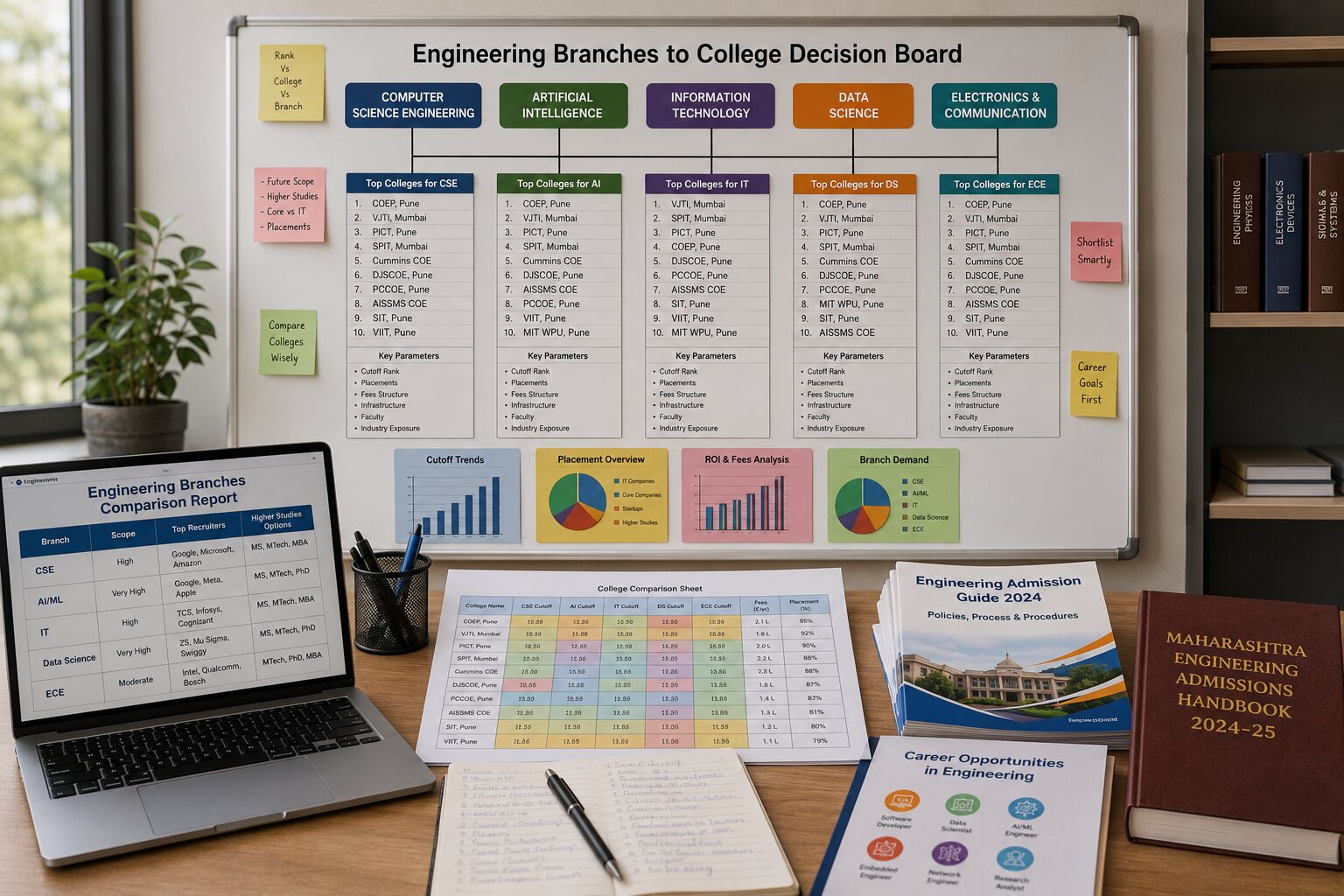
The answer depends on your goals.
Choose Branch First If
You are interested in:
- Computer Science
- AI & ML
- Data Science
- Information Technology
And your goal is:
- Software jobs
- Coding
- Product companies
- Higher studies in CS
In such cases, a slightly lower-ranked college with CSE may be better than a top college with an unrelated branch.
Choose College First If
You are flexible regarding branches and value:
- Brand name
- Alumni network
- Campus life
- Higher studies opportunities
In such situations, choosing a reputed institute may be advantageous.
Strategy for Students Above 99 Percentile
Students scoring above 99 percentile should:
- Include all top colleges
- Prioritize preferred branches
- Fill at least 100–150 choices
- Keep backup options despite excellent scores
Many top-rank students become overconfident and miss opportunities because of limited choices.
Strategy for Students Between 95–99 Percentile
This range is highly competitive.
Students should:
- Study previous cutoff trends carefully
- Include dream colleges
- Focus on realistic options
- Add sufficient safe colleges
The difference between a good and average allotment often depends on option form quality.
Strategy for Students Between 85–95 Percentile
Students in this bracket have many opportunities.
Recommended approach:
- Mix branch and college preferences carefully
- Add emerging branches like AI, ML, DS
- Fill maximum available options
- Include private and government institutes
Avoid being overly selective.
Strategy for Students Below 85 Percentile
Students should prioritize:
- Seat security
- Branch flexibility
- Multiple college options
Remember:
A good engineering career depends more on skills than college rank.
Many successful engineers come from colleges with moderate cutoffs.
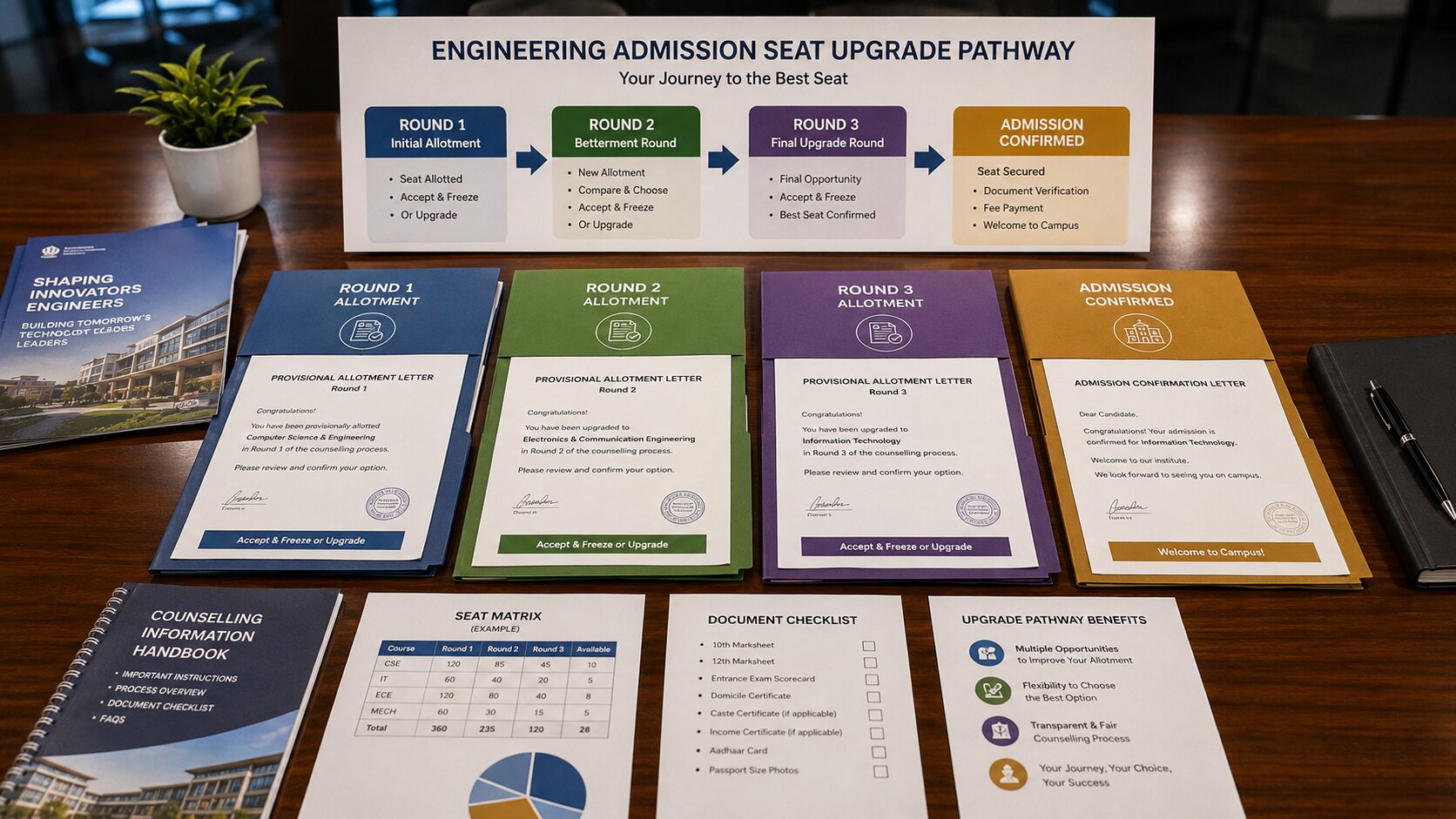
Importance of Round-Wise Planning
Do not think only about CAP Round 1.
Plan for:
CAP Round 1
Aim for the best possible allotment.
CAP Round 2
Many students upgrade.
Cutoffs often move significantly.
CAP Round 3
Further seat movement occurs.
Students should remain active and monitor opportunities.
Discover More on Our Official Website : CLICK HERE
How to Research Colleges Before Filling Choices
Before submitting the option form, evaluate:
Placements
Check:
- Average package
- Highest package
- Core placements
- IT placements
Faculty
Good faculty can influence:
- Academic performance
- Research opportunities
- Industry exposure
Infrastructure
Review:
- Labs
- Libraries
- Hostels
- Campus facilities
Industry Connections
Colleges with strong industry links often provide:
- Internships
- Training
- Placement support
Alumni Network
A strong alumni base helps in:
- Referrals
- Mentorship
- Career guidance

Why You Should Fill Maximum Available Choices
Suppose the counselling system allows 300 choices.
Many students fill only 50.
This unnecessarily reduces possibilities.
Advantages of filling more choices:
- Better seat security
- More upgrade chances
- Lower risk of non-allotment
- Wider college coverage
There is generally no disadvantage to adding more valid options.
How College Predictors Can Help
Modern college predictors analyze:
- Percentile
- Rank
- Category
- Previous cutoff trends
These tools can identify:
- Dream colleges
- Target colleges
- Safe colleges
Using prediction tools before option form submission can significantly improve decision-making.
However, always use them as guidance rather than guarantees.
Final Week Checklist Before Option Form Submission
Before locking your choices, verify:
✅ Category details
✅ Reservation status
✅ Home University status
✅ Branch preferences
✅ College preferences
✅ Previous year cutoffs
✅ Seat matrix
✅ Backup options
✅ Document verification completion
✅ Choice order correctness
A few minutes of checking can save an entire counselling round.
Expert Tips for MHT-CET 2026 CAP Counselling
- Never fill choices randomly.
- Use previous cutoff data extensively.
- Include dream colleges without hesitation.
- Add enough safe colleges.
- Prioritize long-term career goals.
- Fill maximum available choices.
- Research branches carefully.
- Do not blindly follow friends or social media.
- Keep track of official counselling updates.
- Review the option form multiple times before locking.
Conclusion
MHT-CET 2026 CAP counselling is not merely a formality after the examination—it is a strategic process that can shape your engineering career. Students often focus only on percentile and rank, but the option form plays an equally important role in determining the final allotment.
A well-structured option form should include dream colleges, realistic targets, and safe backups. It should reflect your personal career goals, branch preferences, and admission possibilities based on previous years’ cutoff trends. Avoid common mistakes such as filling too few choices, ignoring cutoff analysis, or copying another student’s preference list.
The safest approach is to fill the maximum number of relevant options, research colleges thoroughly, and remain flexible across multiple CAP rounds. Students who prepare a data-driven strategy consistently achieve better allotments than those who rely on guesswork.
Remember, the objective is not just to get a seat—it is to secure the best possible college and branch combination according to your rank, interests, and future ambitions. A few hours spent planning your option form carefully can make a significant difference in the next four years of your engineering journey.
Explore More Educational Content :
MHT-CET 2026 Percentile to College List: Colleges at 85, 90 and 95 Percentile
MHT CET vs JEE Main 2026: Which Score Gets You a Better College in Maharashtra?
FAQs
Q1. How many choices should I fill in the MHT-CET CAP option form?
You should fill as many relevant choices as possible. Most experts recommend filling 100+ options to maximize allotment and upgrade opportunities.
Q2. Can I get a better seat in CAP Round 2 or Round 3?
Yes. Many students upgrade to better colleges and branches in later rounds due to seat movement and withdrawals.
Q3. Should I prioritize branch or college?
It depends on your career goals. Students targeting software careers generally prioritize CSE, IT, AI, or Data Science, while others may prioritize reputed colleges.
Q4. Is previous year cutoff data reliable?
Previous year cutoffs are not guarantees, but they remain the most useful reference for estimating admission chances.
Q5. What is the biggest mistake during option form filling?
The biggest mistake is filling too few choices and not including sufficient realistic and safe options.
Q6. Can a lower-ranked student get a better seat through strategy?
Yes. Proper option form planning often helps students secure better allotments than those who fill choices poorly despite having higher ranks.
Q7. Should I lock the option form immediately?
No. Review your choices multiple times, verify ordering, and then lock the form only after careful analysis.
Q8. Do dream colleges reduce my chances of getting a realistic college?
No. The allotment system checks choices sequentially. Including dream colleges does not harm your chances of receiving lower choices.
Q9. Is filling more choices beneficial?
Yes. More choices increase seat security and improve the probability of receiving a favorable allotment.
Q10. What should I do after Round 1 allotment?
Analyze upgrade possibilities, understand freeze/float options carefully, and participate in subsequent rounds if a better seat is possible.
Pingback: JoSAA Counselling 2026 Guide: Registration