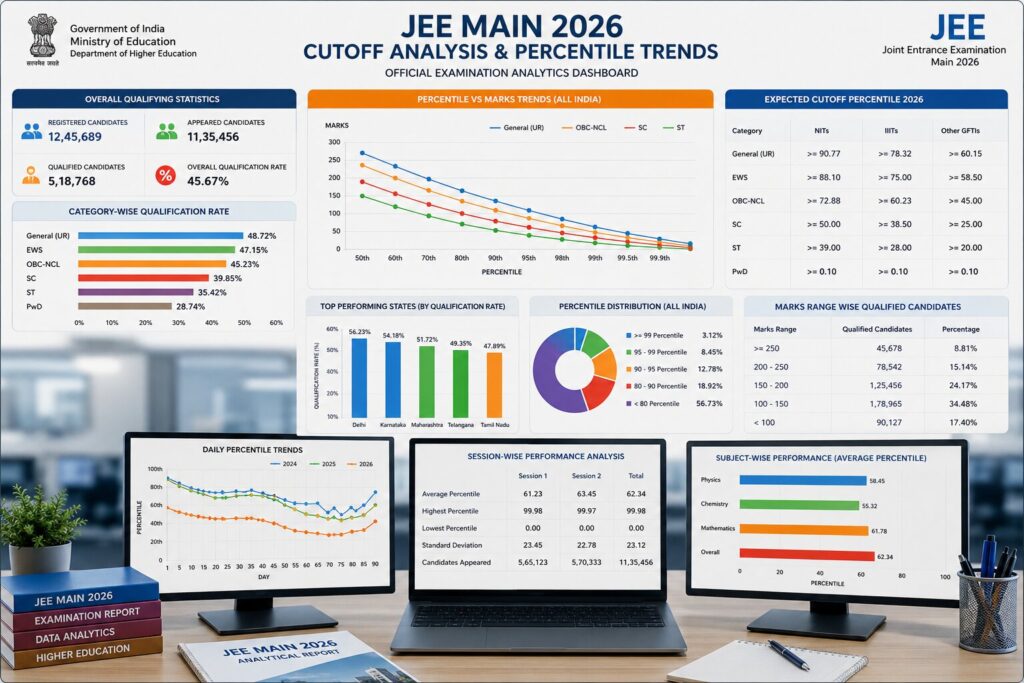
JEE Main 2026 Expected Cutoff for JEE Advanced: Category-Wise Percentile, Marks and Rank Analysis
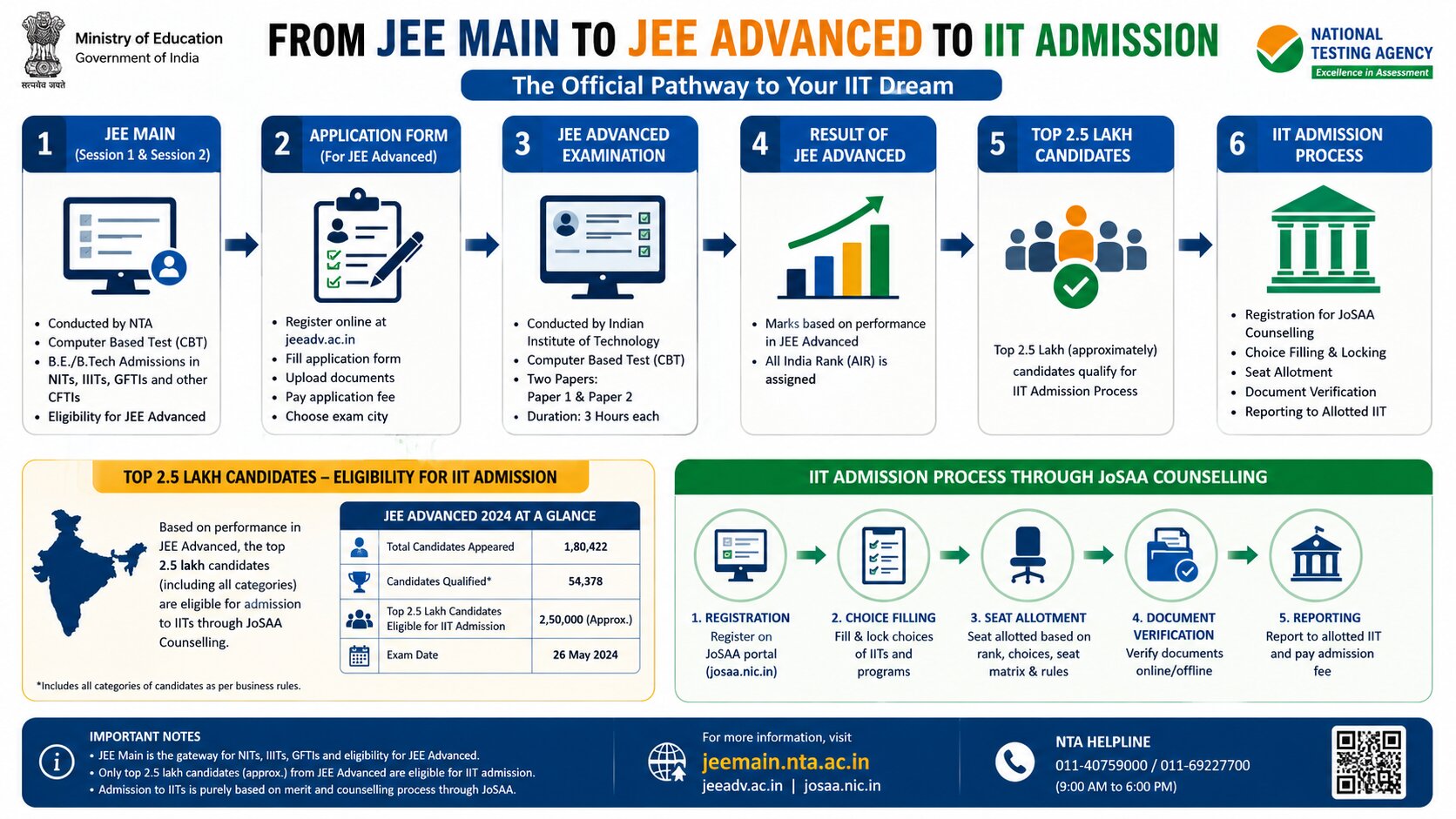
The Joint Entrance Examination (JEE) Main is India’s most competitive engineering entrance examination and serves as the gateway to prestigious institutions such as NITs, IIITs, and GFTIs. More importantly, JEE Main acts as the qualifying examination for JEE Advanced, the entrance test for admission into the Indian Institutes of Technology (IITs).
Every year, lakhs of students appear for JEE Main, but only the top-performing candidates are allowed to register for JEE Advanced. Therefore, understanding the expected JEE Main cutoff is crucial for every IIT aspirant.
Explore Eligible Colleges Based on Your Percentile : CLICK HERE
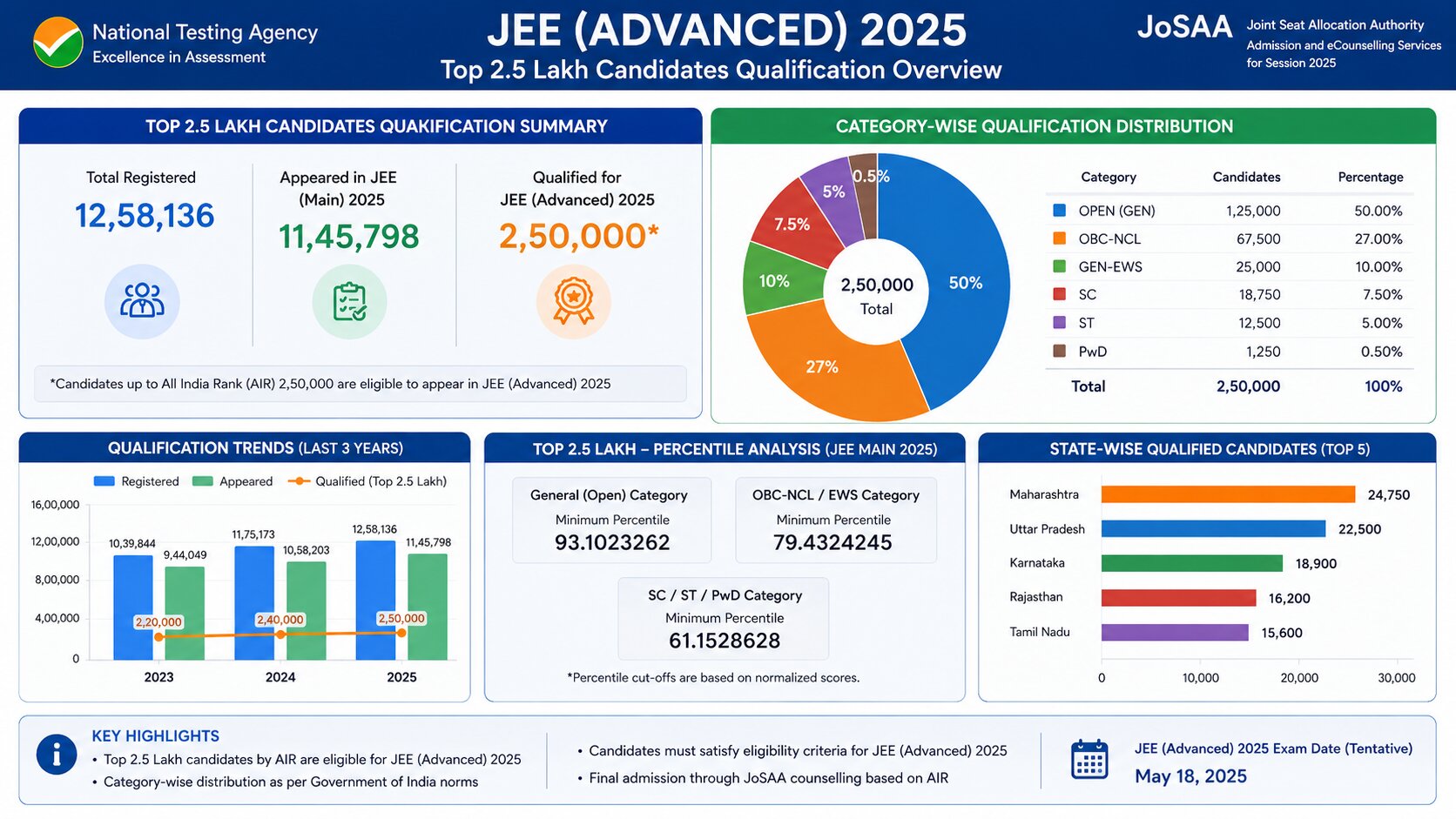
For JEE Advanced 2026 eligibility, candidates must be among the top 2.5 lakh successful candidates in JEE Main 2026 across all categories. The category-wise distribution follows the official reservation structure prescribed by the exam authorities.
This article provides a detailed analysis of the expected JEE Main 2026 cutoff for JEE Advanced, previous year trends, factors affecting cutoff, category-wise predictions, and safe target percentiles.
What is JEE Main Qualifying Cutoff?
Many students confuse the JEE Main qualifying cutoff with college admission cutoffs.
Visit Official Website : CLICK HERE
The qualifying cutoff is the minimum percentile required to become eligible for JEE Advanced. It does not guarantee admission to NITs, IIITs, or IITs.
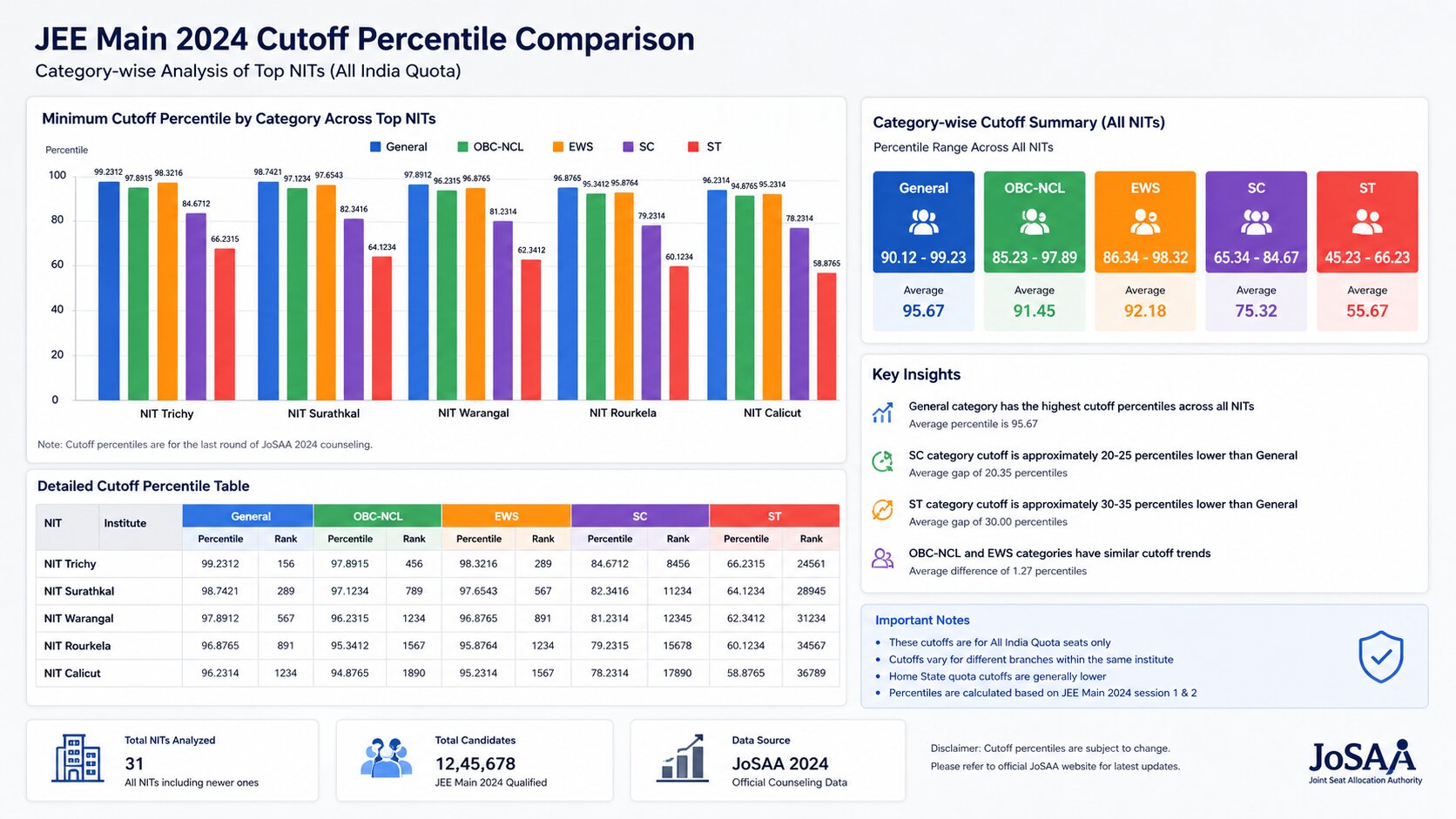
The admission cutoff for NITs and IITs is generally much higher and depends on rank, category, seat availability, and branch preference.
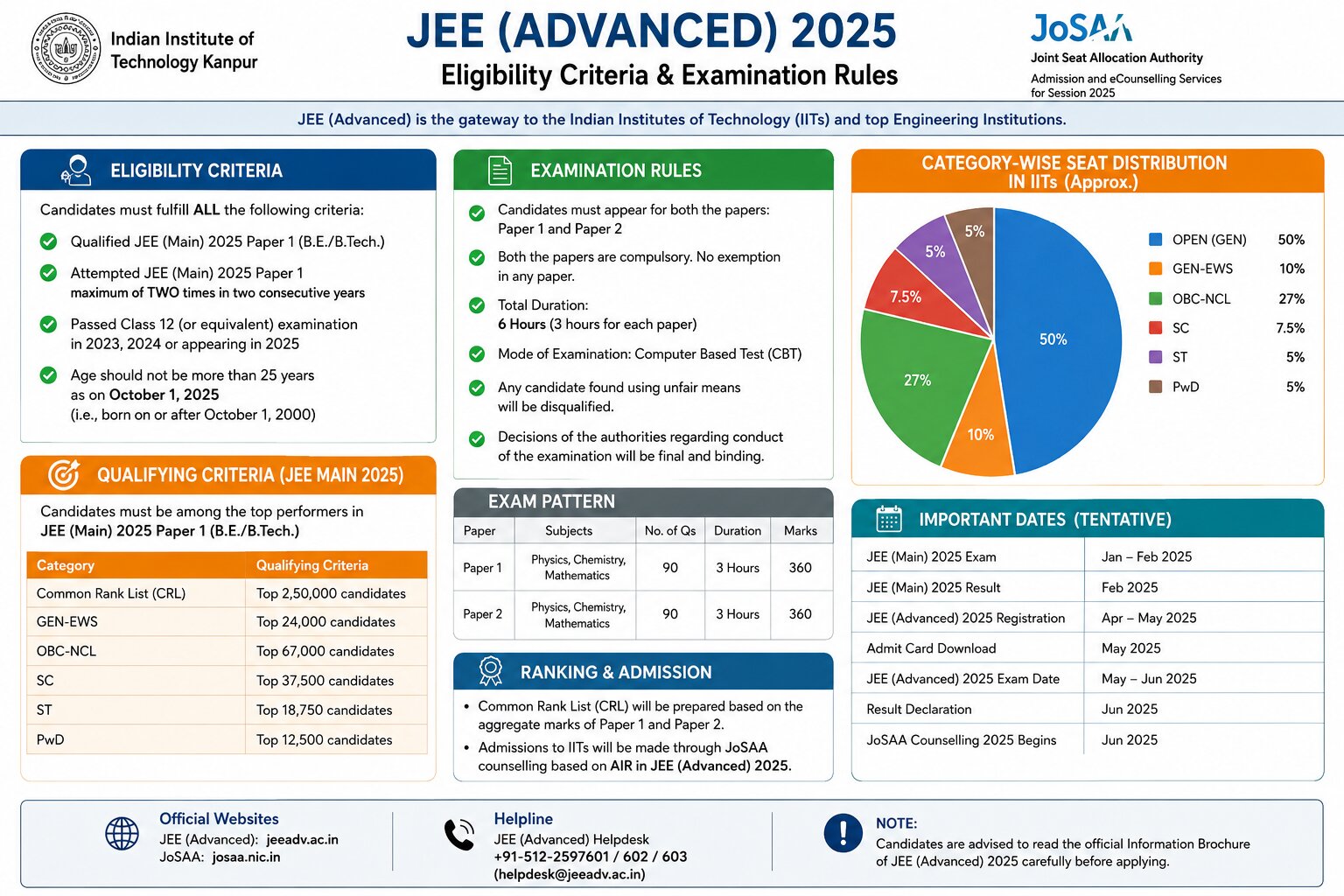
JEE Advanced Eligibility Through JEE Main
According to the official eligibility criteria, candidates must rank among the top 2,50,000 successful candidates in JEE Main 2026 Paper 1 (B.E./B.Tech.) to appear for JEE Advanced 2026.
Visit Official Website : Click here
The category-wise distribution is:
| Category | Share of Qualified Candidates |
|---|---|
| OPEN | 40.5% |
| OBC-NCL | 27% |
| SC | 15% |
| ST | 7.5% |
| GEN-EWS | 10% |
Additionally, 5% horizontal reservation exists for PwD candidates within each category.
Know More about it : CLICK HERE
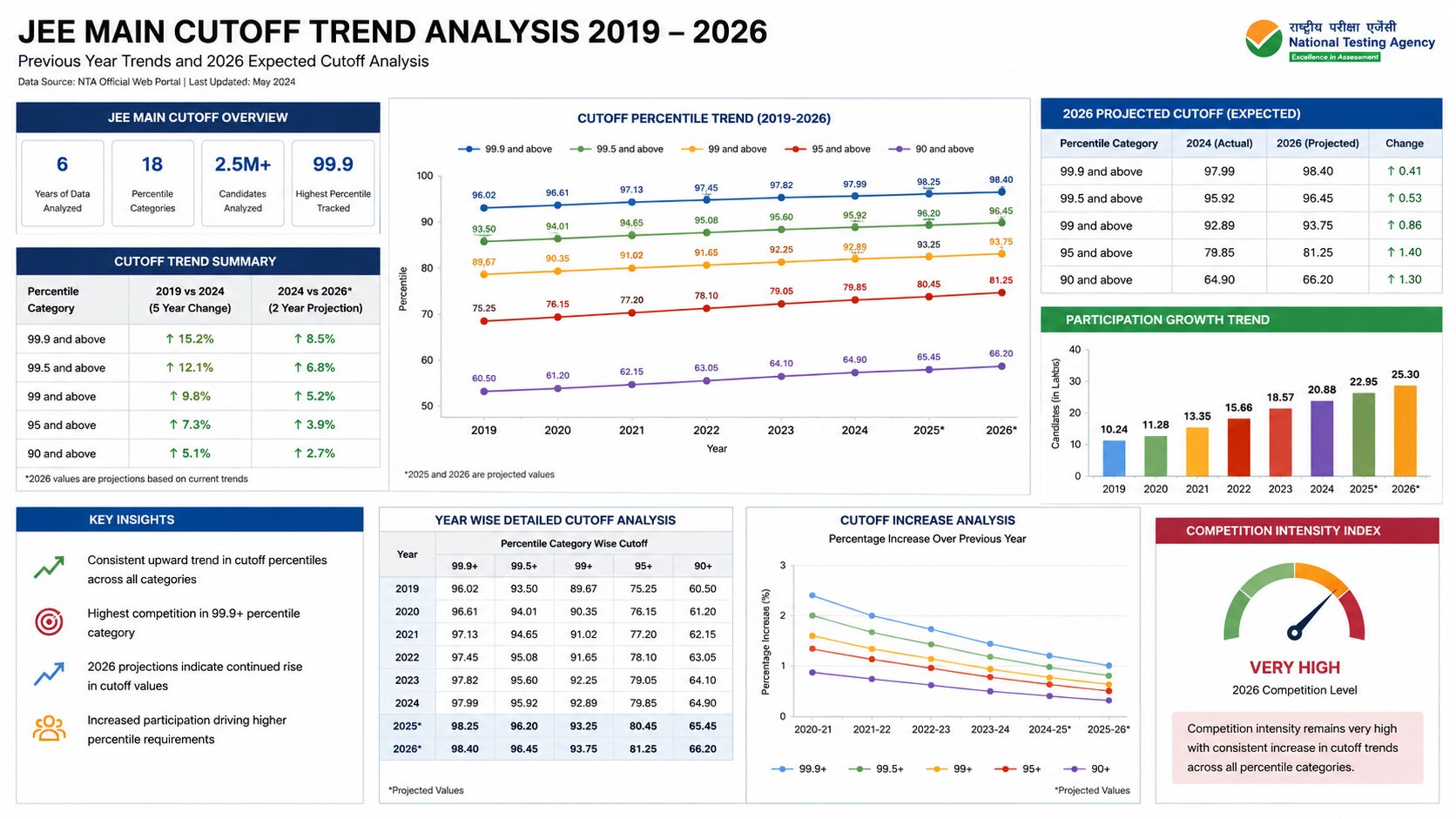
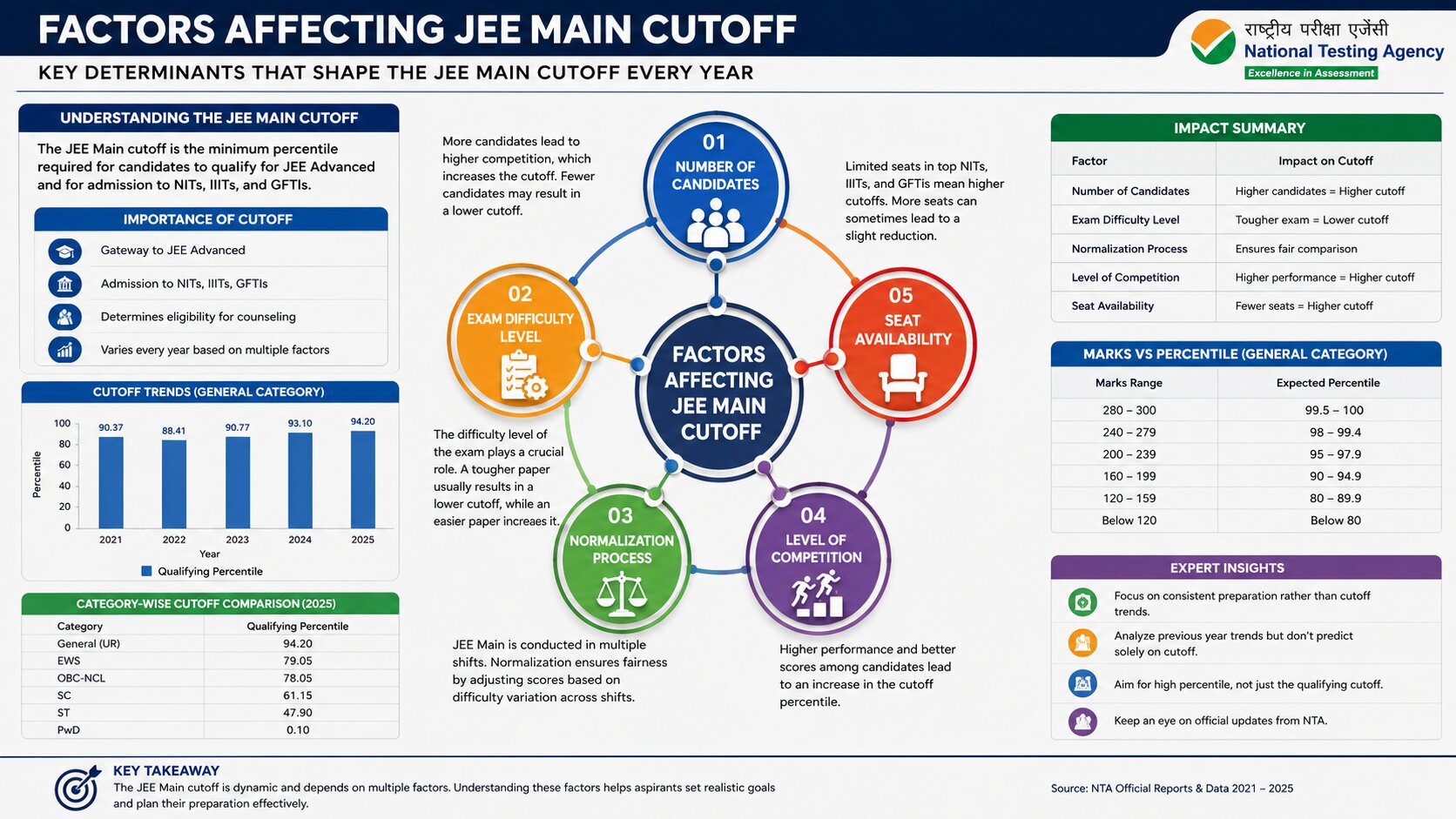
JEE Main Cutoff Trends (Previous Years)
Analyzing previous year cutoffs helps estimate future trends.
| Year | General Cutoff Percentile |
|---|---|
| 2022 | 88.41 |
| 2023 | 90.77 |
| 2024 | 93.23 |
| 2025 | 93.10 |
| 2026 | 93.41 |
Recent data indicates that the General category cutoff has stabilized around 93 percentile, reflecting increasing competition among aspirants.
Official JEE Main 2026 Qualifying Cutoff
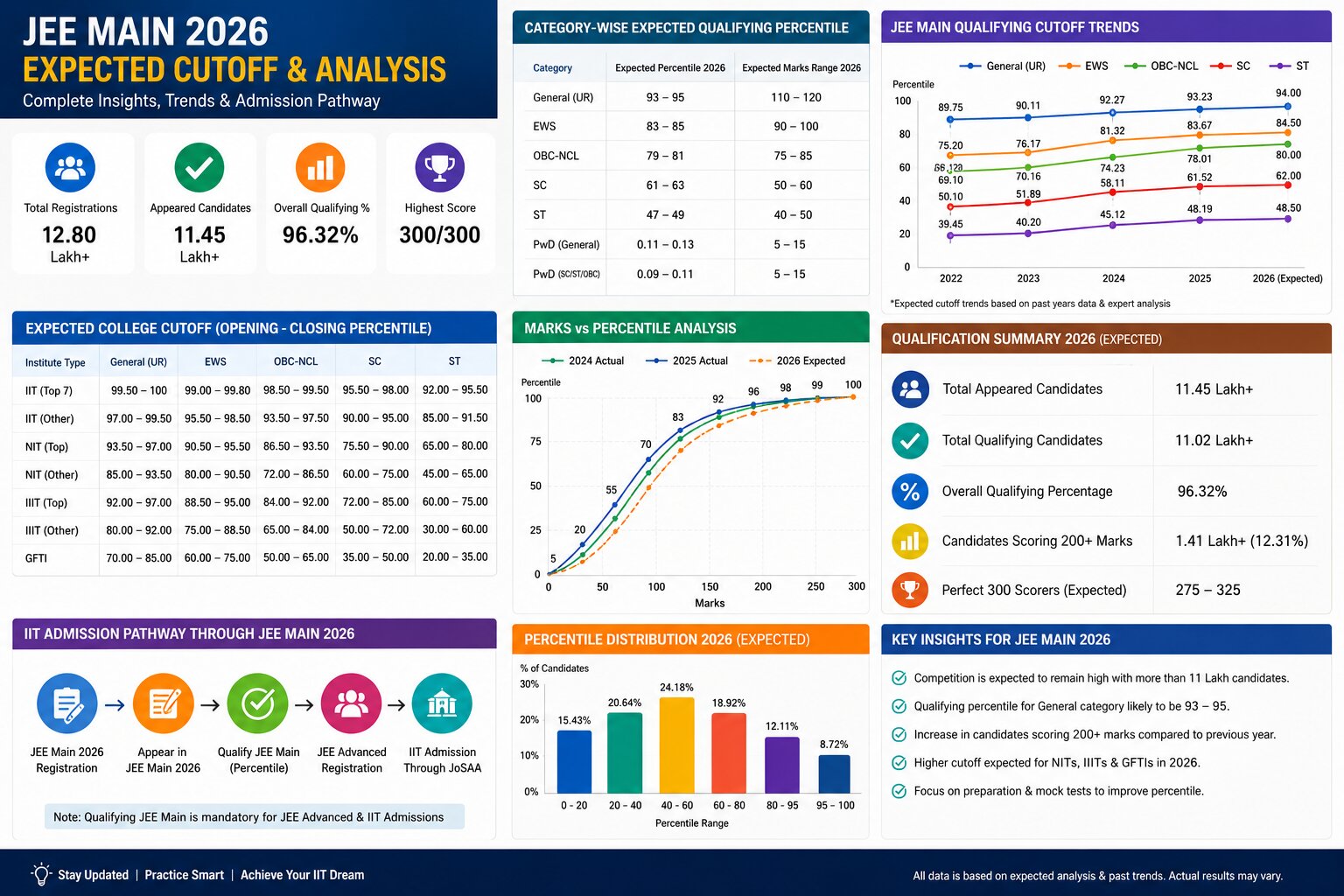
Based on published category-wise cutoff data, the qualifying percentile for JEE Advanced eligibility in 2026 is approximately:
| Category | Cutoff Percentile |
|---|---|
| General (UR) | 93.41 |
| GEN-EWS | 82.41 |
| OBC-NCL | 80.92 |
| SC | 63.91 |
| ST | 52.01 |
| UR-PwD | 0.002 |
Around 2,50,182 candidates qualified for JEE Advanced 2026 through JEE Main.
Expected JEE Main Cutoff for Future Aspirants
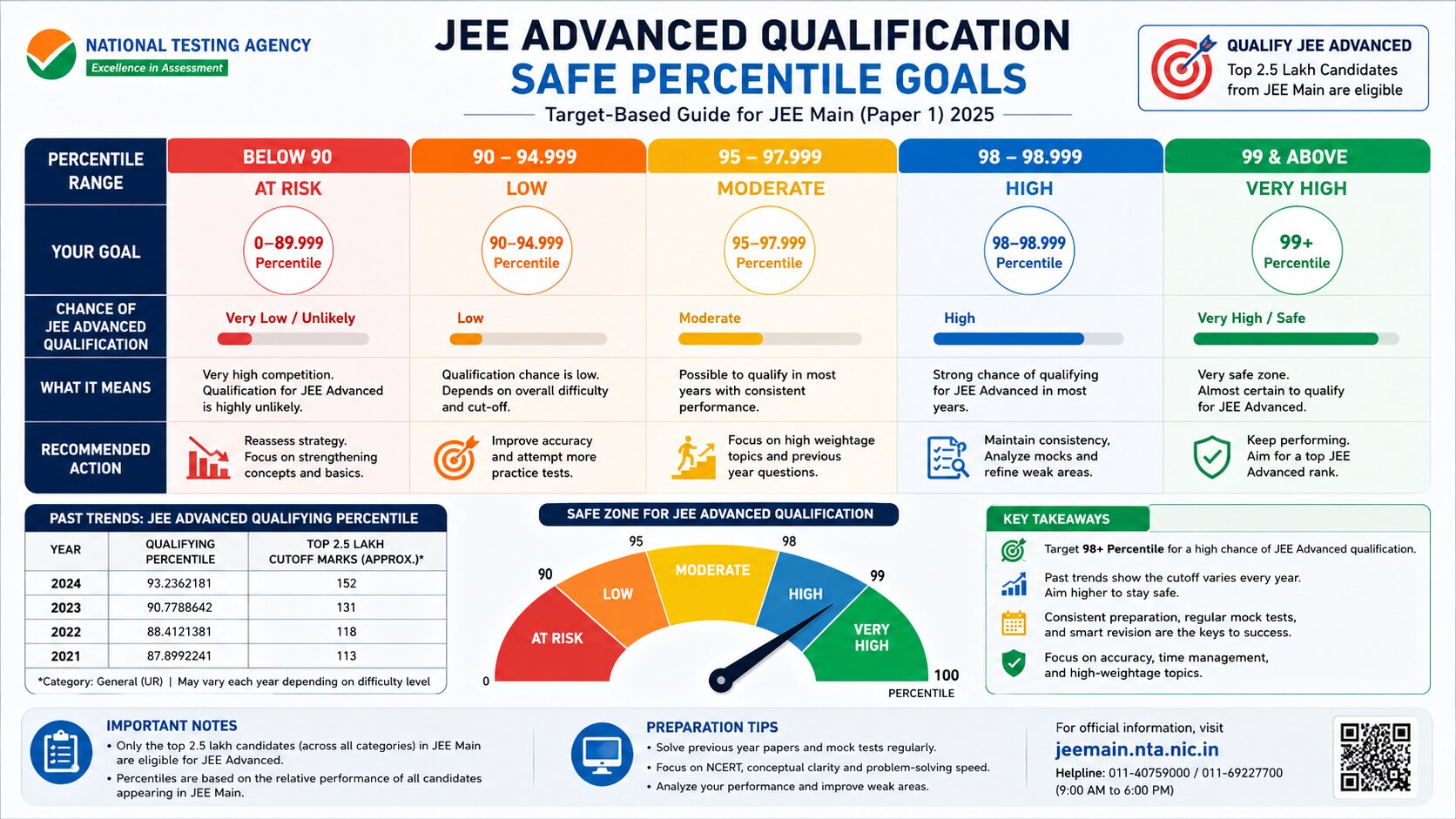
Students preparing for upcoming sessions should focus on safe target percentiles rather than merely crossing the cutoff.
Expected Safe Percentiles
| Category | Expected Cutoff | Safe Target |
|---|---|---|
| General | 93–95 | 96+ |
| EWS | 80–83 | 85+ |
| OBC-NCL | 80–82 | 84+ |
| SC | 62–65 | 70+ |
| ST | 48–52 | 58+ |
| PwD | Below 1 | As high as possible |
Experts predict the General category cutoff to remain around 93.5–95 percentile depending on competition and exam difficulty.
Learn More Through Our Official Website : CLICK HERE
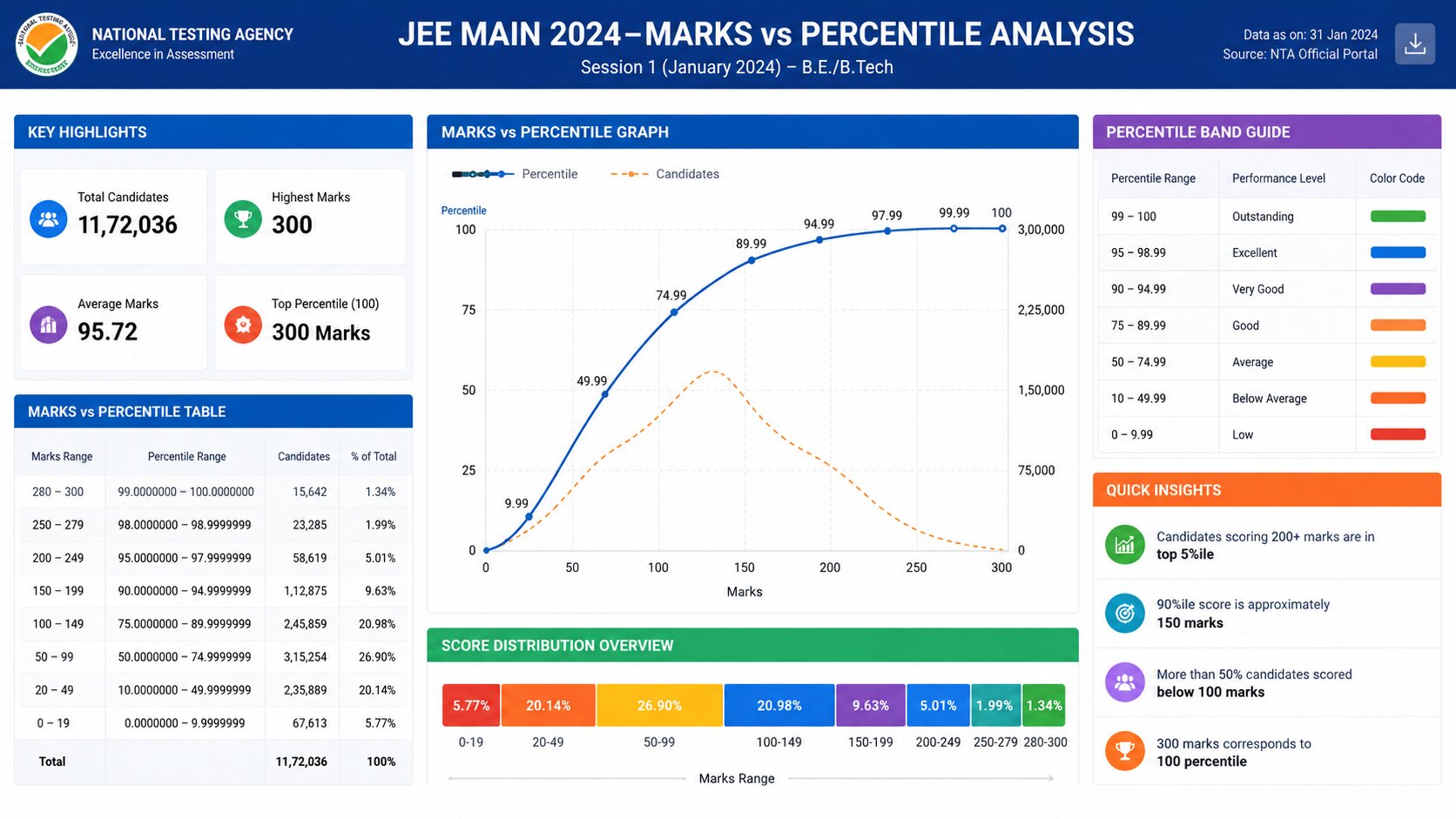
Expected Marks vs Percentile in JEE Main 2026
While percentile is the deciding factor, students often want to know the approximate marks needed.
The actual marks vary across sessions because NTA uses normalization. However, the following estimates are generally observed:
| Percentile | Expected Marks |
|---|---|
| 99.5 | 230–260 |
| 99 | 190–220 |
| 98 | 170–190 |
| 97 | 150–170 |
| 95 | 125–145 |
| 93 | 105–125 |
| 90 | 90–105 |
These values may vary depending on paper difficulty and session-wise normalization.
Factors Affecting JEE Main Cutoff
1. Number of Candidates
When more students appear for JEE Main, competition increases significantly.
In recent years, the number of aspirants has crossed 15 lakh registrations, making qualification tougher than before.
2. Difficulty Level of Examination
An easier paper generally pushes cutoffs upward, while a tougher paper lowers them.
For example, easier papers in previous years resulted in higher qualifying percentiles, whereas tougher papers reduced cutoff requirements.
3. Overall Student Performance
If candidates perform exceptionally well across sessions, percentile requirements increase.
4. Normalization Process
NTA conducts JEE Main across multiple shifts. Percentiles are calculated through normalization to ensure fairness across different difficulty levels.
5. Availability of JEE Advanced Seats
Although JEE Advanced eligibility is based on top 2.5 lakh candidates, the number of available IIT seats indirectly influences competition levels.
Category-Wise Analysis
General Category
The General category consistently faces the highest competition.
Candidates should target at least 96 percentile to comfortably qualify and maintain strong admission opportunities.
A 93–94 percentile may qualify, but there is very little margin for error.
OBC-NCL Category
The OBC cutoff generally remains around 80–82 percentile.
Students targeting IITs should aim for 90+ percentile rather than focusing solely on eligibility.
EWS Category
The EWS cutoff remains close to the OBC cutoff.
An 85+ percentile provides a safe cushion for qualification.
SC Category
Historically, the SC cutoff remains in the 60–65 percentile range.
Candidates scoring 70+ percentile usually remain in a safer position.
ST Category
The ST cutoff generally falls between 48 and 52 percentile.
Aiming for 60+ percentile significantly improves prospects.
PwD Candidates
PwD cutoffs are considerably lower because of reservation provisions.
Nevertheless, higher scores improve branch and institute choices during counselling.
What Rank Corresponds to JEE Main Cutoff?
Approximate ranks based on percentile:
| Percentile | Approximate Rank |
|---|---|
| 99.9 | Top 15,000 |
| 99 | Top 1.5 lakh |
| 98 | Top 2 lakh |
| 95 | Top 3 lakh |
| 93 | Around JEE Advanced Qualification Range |
These figures vary every year depending on the number of candidates.
How Many Students Qualify for JEE Advanced?
The official limit remains approximately 2.5 lakh candidates.
In JEE Main 2026, approximately 2,50,182 candidates became eligible for JEE Advanced.
This makes qualification extremely competitive because only a small fraction of total candidates advance to the next stage.
What Happens After Qualifying JEE Main?
Once candidates clear the JEE Main cutoff:
- Register for JEE Advanced.
- Appear in both Advanced papers.
- Secure rank in the JEE Advanced rank list.
- Participate in JoSAA counselling.
- Choose IITs, NITs, IIITs, and GFTIs during seat allocation.
Preparation Strategy to Cross the Cutoff
Focus on NCERT First
A strong NCERT foundation helps in Physics, Chemistry, and Mathematics.
Attempt Mock Tests Regularly
Mock tests improve speed, accuracy, and time management.
Analyze Previous Year Papers
Understanding question patterns helps predict important topics.
Improve Accuracy
Avoid negative marking by focusing on accuracy rather than attempting every question.
Target Higher Than the Cutoff
Never prepare merely for the qualifying percentile.
Aiming for 98+ percentile creates a comfortable safety margin.
Common Mistakes Students Make
- Focusing only on marks instead of percentile.
- Ignoring normalization effects.
- Preparing only for JEE Main and delaying Advanced preparation.
- Depending entirely on expected cutoffs.
- Neglecting mock test analysis.
Avoiding these mistakes can significantly improve performance.
Expected Cutoff Summary
| Category | Expected Percentile Range |
|---|---|
| General | 93.5–95 |
| EWS | 80.5–82.5 |
| OBC-NCL | 79.5–81.5 |
| SC | 61.5–64 |
| ST | 48–50.5 |
| PwD | Below 1 |
These projections are based on previous year trends, candidate volume, and competition levels.
Check Out More Articles :
JoSAA Counselling 2026 Guide: Registration, Choice Filling and Seat Allotment
JEE Advanced Result 2026 Out – Predict IIT College by Rank
Conclusion
The JEE Main cutoff for JEE Advanced remains one of the most important benchmarks for engineering aspirants. Recent trends show that the General category cutoff has stabilized around 93–94 percentile, while reserved categories continue to receive relaxation according to government norms. Approximately 2.5 lakh candidates qualify each year for JEE Advanced, making competition intense. Aspirants should focus on achieving a safe percentile well above the expected cutoff rather than targeting the minimum qualifying score.
Aiming for 96+ percentile for General category and proportionally higher targets for other categories provides the best chance of securing JEE Advanced eligibility and opening the door to IIT admissions. Consistent preparation, mock tests, and smart revision remain the keys to success.
Pingback: JEE Advanced 2026 Marks vs Rank Analysis: Expected Rank