Direct Admission vs CET Admission in Engineering 2026: Fees, Placements & Career Comparison
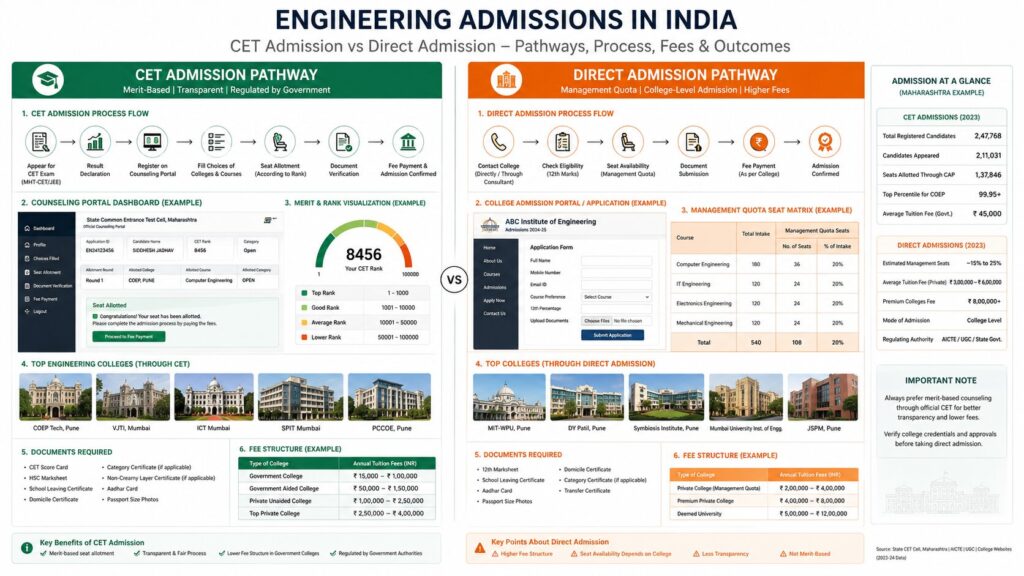
Engineering admission in India generally happens through two major routes: CET-based admission and Direct Admission (Management Quota/Institutional Quota). Every year, lakhs of students appear for entrance examinations such as MHT CET, KCET, WBJEE, AP EAPCET, TS EAMCET, and other state-level entrance tests to secure engineering seats through centralized counselling. At the same time, many private engineering colleges also offer seats through direct admission under management or institutional quotas, subject to state government regulations and eligibility criteria.
Predict Your Dream College Instantly : CLICK HERE
For students and parents, choosing between these two admission routes can be confusing. Is CET admission always better? Does direct admission reduce placement opportunities? Is paying a higher fee for management quota worth it?
This article explains the complete comparison using official admission frameworks followed by engineering colleges and state counselling authorities.
Understanding CET Admission
CET (Common Entrance Test) admission is the most common method of getting into engineering colleges in India. Under this system, students appear for a state-level or national-level entrance examination and participate in centralized counselling.

Examples include:
- MHT CET (Maharashtra)(CLICK HERE)
- KCET (Karnataka)(CLICK HERE)
- WBJEE (West Bengal)(CLICK HERE)
- AP EAPCET (Andhra Pradesh)(CLICK HERE)
- TS EAMCET (Telangana)(CLICK HERE)
- JEE Main (for NITs, IIITs, and many private colleges)(CLICK HERE)
After results are declared, candidates receive ranks and participate in counselling where seats are allotted according to merit, reservation policies, and seat availability. Many states use centralized or single-window counselling systems to ensure transparency and merit-based allocation.
How CET Admission Works
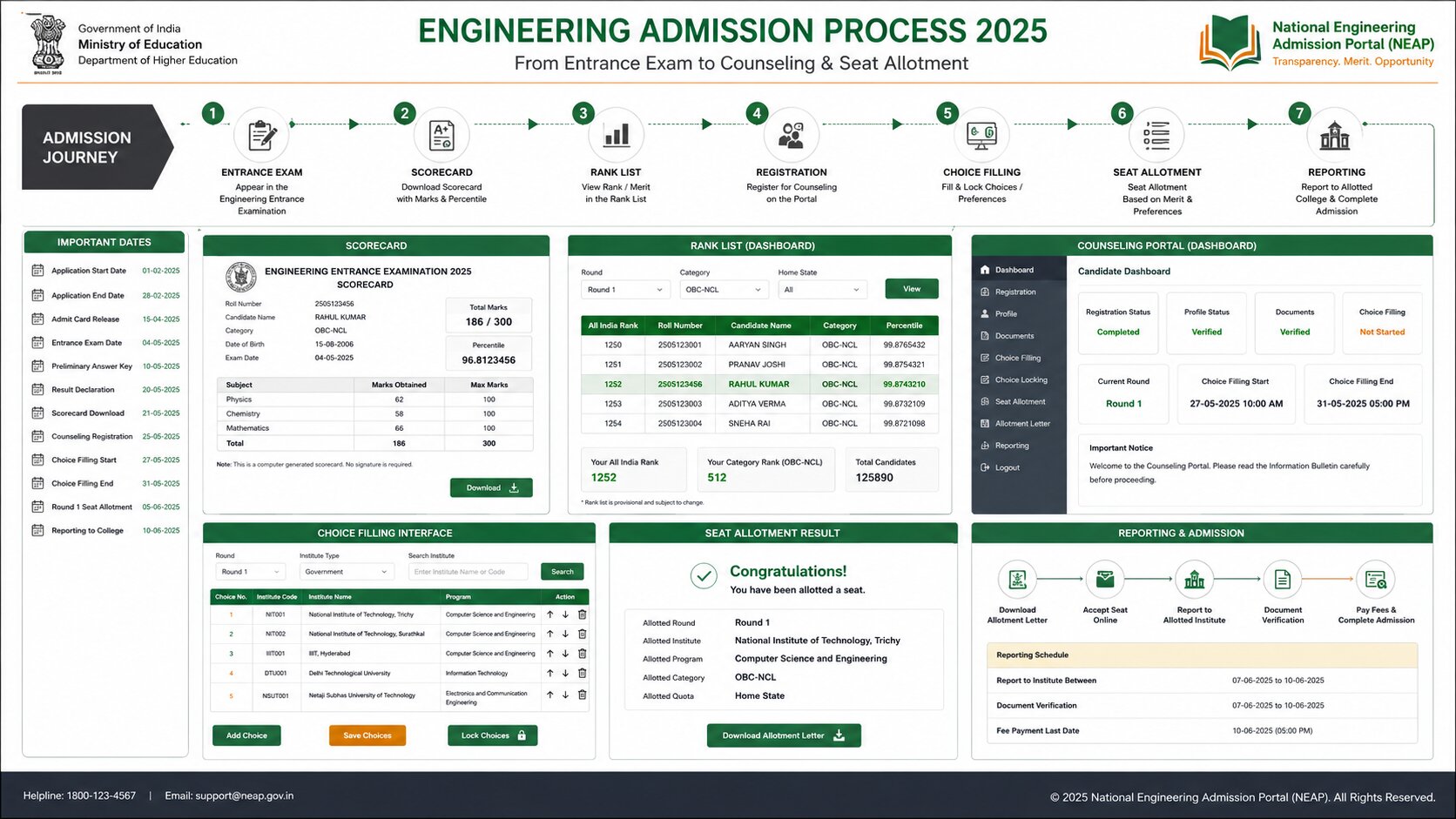
- Register for the entrance examination.
- Appear for the exam.
- Obtain rank based on performance.
- Participate in counselling.
- Fill college and branch preferences.
- Seat allotment based on rank and category.
- Confirm admission and complete document verification.
The process is highly structured and regulated by state authorities.
What Is Direct Admission?
Direct admission generally refers to admission through:
- Management Quota
- Institutional Quota
- Vacant Seats after Counselling
- NRI Quota (where applicable)
In this process, students approach colleges directly rather than depending solely on counselling rank.
Many private engineering colleges reserve a certain percentage of seats under management quota as permitted by state regulations. For example, several private engineering institutions in Karnataka allow admissions through management quota while also accepting students through entrance examinations such as KCET, COMEDK, or JEE Main.
Direct admission does not mean admission without eligibility. Students must still satisfy minimum academic requirements prescribed by regulatory authorities and state governments.
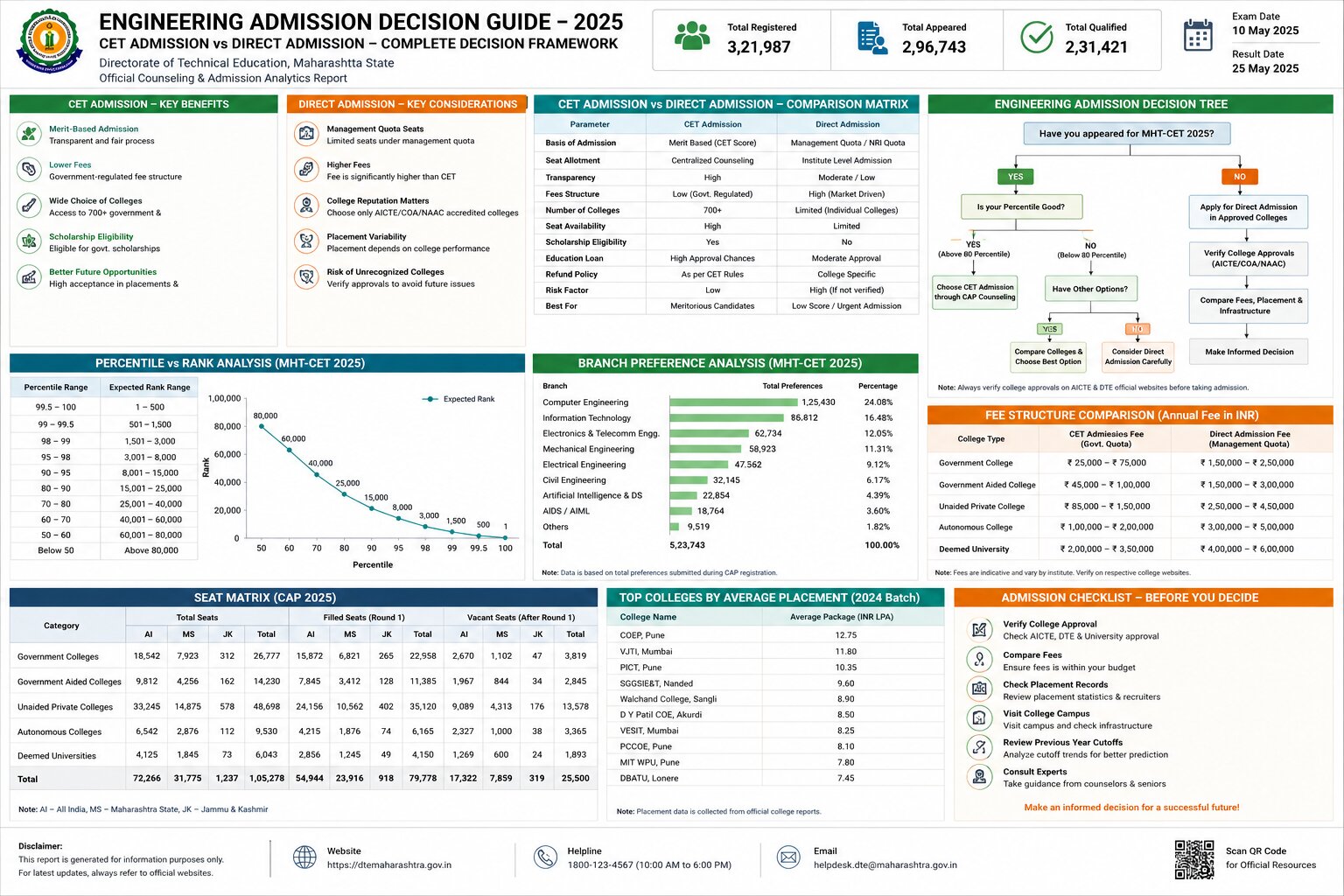
CET Admission vs Direct Admission: Quick Comparison

| Factor | CET Admission | Direct Admission |
|---|---|---|
| Selection Basis | Entrance Rank | Eligibility + Seat Availability |
| Fee Structure | Lower | Usually Higher |
| Competition | Very High | Comparatively Lower |
| Counselling Required | Yes | Usually No |
| Merit Dependency | High | Moderate |
| Seat Availability | Limited by Rank | Depends on College |
| Popular Branch Access | Rank-Based | Available if Seats Exist |
| Admission Speed | Longer Process | Faster Process |
| Transparency | Very High | Depends on Institution |
| Financial Burden | Lower | Higher |
Advantages of CET Admission
1. Lower Fees
The biggest advantage of CET admission is affordability.
Government colleges and government-aided institutions generally charge significantly lower tuition fees compared to management quota admissions.
For middle-class families, this can reduce educational expenses by several lakhs of rupees over four years.
2. Merit-Based Selection
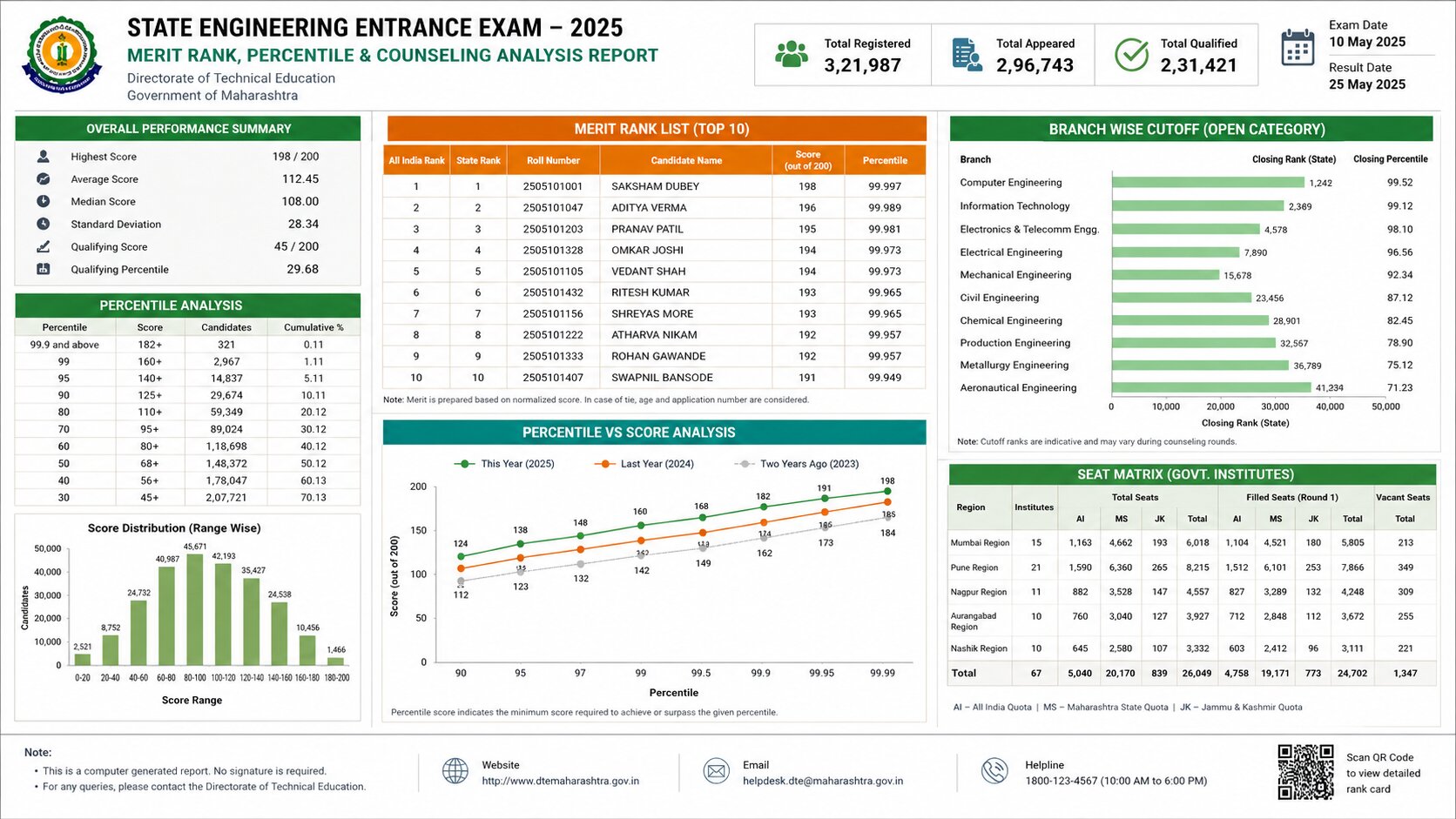
CET admissions are based on entrance examination performance and counselling rank.
Students who perform well can secure admission in top colleges and preferred branches without paying additional management quota fees.
3. Better Return on Investment
Because fees are lower, students often achieve a better return on investment (ROI) after graduation.
Even average placement packages can justify the educational cost.
4. Government Oversight
Counselling authorities supervise the entire process.
Seat allotment follows merit lists, reservation policies, and official regulations, reducing the possibility of unfair allocation.
5. Access to Government Colleges
Most government engineering colleges admit students only through entrance examinations and counselling.
Direct admission opportunities are usually unavailable in such institutions.
Disadvantages of CET Admission
1. Extremely Competitive
Top branches such as:
- Computer Science Engineering
- Artificial Intelligence
- Data Science
- Information Technology
often require excellent ranks.
A small score difference can result in a significant rank difference.

2. Limited Flexibility
Students may not always receive their preferred college or branch.
Many candidates must compromise between:
- Better college + lower-demand branch
- Average college + preferred branch
3. Counselling Delays
The counselling process can extend over multiple rounds, creating uncertainty regarding final admission.
4. High Pressure
Entrance exam preparation requires substantial effort and can create academic stress.
Advantages of Direct Admission
1. Easier Access to Preferred Colleges
Students who miss desired CET ranks can still secure seats in many private engineering colleges through management quota.
This is especially useful for:
- Computer Science Engineering
- Artificial Intelligence
- Cyber Security
- Data Science
where competition is intense.
2. Faster Admission Process
Direct admission is generally quicker.
Students can confirm seats without waiting for multiple counselling rounds.
3. Backup Option
Direct admission acts as a safety net for students who:
- Underperformed in entrance exams
- Missed counselling deadlines
- Want admission certainty early
4. Reduced Exam Pressure
Students are not entirely dependent on a single entrance examination score.
5. Availability of Emerging Branches

Many colleges offer direct admission in rapidly growing fields including:
- AI & Machine Learning
- Data Science
- Cyber Security
- Robotics
- Cloud Computing
provided seats remain available.
Disadvantages of Direct Admission
1. Higher Fees
This is the biggest drawback.
Management quota fees are generally higher than regular counselling fees.
The difference can range from a few thousand rupees to several lakhs depending on:
- College reputation
- Branch demand
- State regulations
2. Financial Burden on Families
Students should carefully evaluate whether higher fees are justified by the college’s placement record and academic quality.
3. Risk of Choosing the Wrong College
Some students focus only on getting a seat quickly and overlook factors such as:
- Accreditation
- Faculty quality
- Placement records
- Industry connections
4. Limited Availability in Top Institutions
Many premier institutions fill most seats through entrance-based counselling, leaving fewer opportunities under management quota.
Does Direct Admission Affect Placements?
One of the most common myths is:
“Management quota students get lower placements.”
In reality, placement opportunities are generally based on:
- Academic performance
- Skills
- Projects
- Internships
- Interview performance
Most colleges do not differentiate between CET students and direct admission students during placements.
Once admitted, students study in the same classrooms, use the same facilities, and participate in the same placement drives.
Therefore, your performance during four years matters far more than your admission route.
Which Students Should Choose CET Admission?
CET admission is ideal if:
- You have a strong entrance exam rank.
- You want lower fees.
- You are targeting government colleges.
- You prefer merit-based seat allocation.
- You want maximum ROI.
Students who can secure good ranks should usually prioritize CET admissions first.

Discover More on Our Official Website : CLICK HERE
Which Students Should Choose Direct Admission?
Direct admission may be suitable if:
- You missed the required cutoff.
- You want a specific branch.
- You need admission certainty.
- Your preferred college still has available seats.
- Your family is comfortable with the higher fee structure.
For many students, direct admission serves as a practical alternative when counselling results are not favorable.
Cost Comparison Example
Consider a hypothetical scenario:
CET Admission
- Tuition Fee: Lower
- Admission Based on Rank
- Additional Costs: Minimal
Direct Admission
- Tuition Fee: Higher
- Immediate Seat Confirmation
- Additional Institutional Charges Possible
Students should calculate the total four-year cost before making a decision.
A college with slightly lower rankings but significantly lower fees may provide a better ROI than an expensive management quota seat.
Factors to Consider Before Choosing
College Quality
Evaluate:
- NBA Accreditation
- NAAC Grade
- Faculty Strength
- Laboratory Infrastructure
- Industry Partnerships

Placement Record
Look for:
- Placement Percentage
- Average Package
- Highest Package
- Recruiters
Branch Preference
Sometimes branch selection can be more important than college reputation, especially in technology-driven careers.
Financial Planning
Never choose a costly admission route without understanding:
- Total fee burden
- Hostel costs
- Education loan implications
Future Career Goals
Students aiming for:
- Software Development
- Data Science
- Cyber Security
- Product Companies
should focus heavily on skill development irrespective of admission mode.
Common Myths About Direct Admission
Myth 1: Direct Admission Students Are Weaker
False.
Many talented students use management quota because they:
- Had a bad exam day
- Appeared late for counselling
- Preferred a specific college
Myth 2: Placements Are Different
False.
Placement eligibility is generally the same for all students.
Myth 3: Direct Admission Means No Eligibility Requirements
False.
Students must still satisfy academic eligibility criteria prescribed by regulatory authorities and state governments.
Myth 4: CET Students Always Get Better Careers
False.
Career growth depends on:
- Technical skills
- Communication
- Internships
- Networking
- Projects
rather than admission category.
Read More Related Posts :
JEE Main vs MHT CET 2026: Which Exam is Better for Engineering Admissions?
Management Quota Admission in Bangalore Engineering Colleges 2026: Process, Fees, Eligibility and Documents
Final Verdict: Which Is Better?
There is no single answer for every student.
Choose CET Admission if:
- You have a competitive rank.
- You want lower fees.
- You are targeting government or top merit-based institutions.
- ROI is your primary concern.
Choose Direct Admission if:
- You missed desired cutoffs.
- You need admission certainty.
- You want a specific branch.
- The college has strong placements and good infrastructure.
- Higher fees are manageable.
In most situations, students should first attempt admission through CET counselling because it is merit-based, transparent, and cost-effective. Direct admission should be viewed as a valuable alternative when counselling outcomes do not align with academic goals.
Ultimately, success in engineering depends far more on your skills, internships, projects, certifications, and continuous learning than on whether your admission came through CET counselling or direct admission.