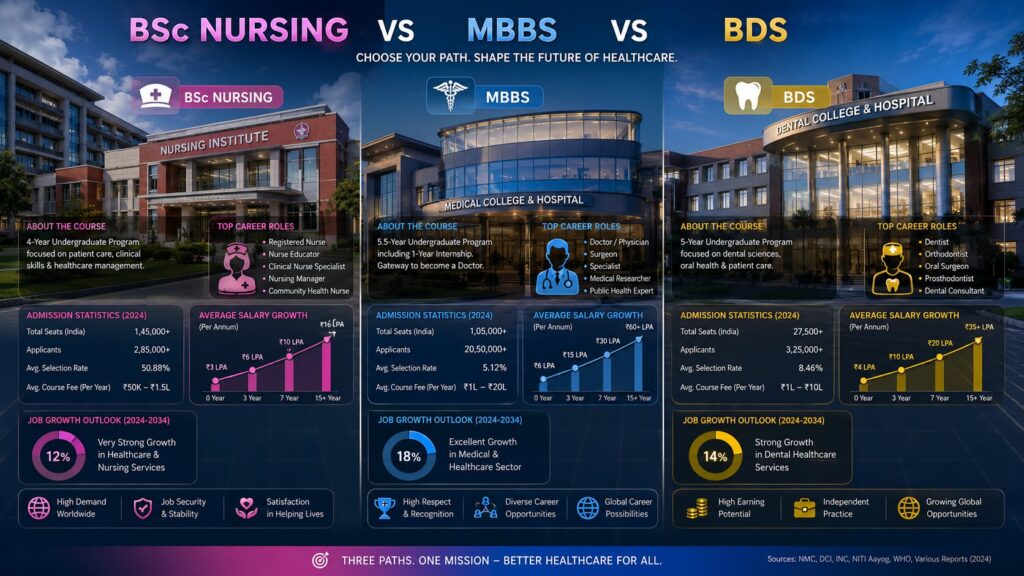
BSc Nursing vs MBBS vs BDS: Fees, Salary, Scope, Career Comparison 2026
Every year after Class 12, lakhs of students interested in healthcare careers face a major decision:
Should I choose MBBS, BDS or BSc Nursing?
All three courses belong to the healthcare sector, but they lead to very different career paths.
Find Your Perfect College Match Today : CLICK HERE
Many students automatically prefer MBBS because of its popularity. Others consider BDS because it offers a doctor title. Meanwhile, BSc Nursing has emerged as one of the fastest-growing healthcare careers in India and globally.
The right choice depends on:
- Career goals
- Budget
- NEET performance
- Duration of study
- Job expectations
- Long-term professional interests
This guide compares BSc Nursing, MBBS and BDS using officially recognized admission systems and course structures.
Understanding the Three Courses
Although all three belong to healthcare education, their focus areas differ significantly.
MBBS
Training for becoming a medical doctor.
BDS
Training for becoming a dental surgeon.
BSc Nursing
Training for becoming a nursing professional.
Each profession plays a crucial role in the healthcare system.
Admission Process
Admission requirements vary.
MBBS Admission
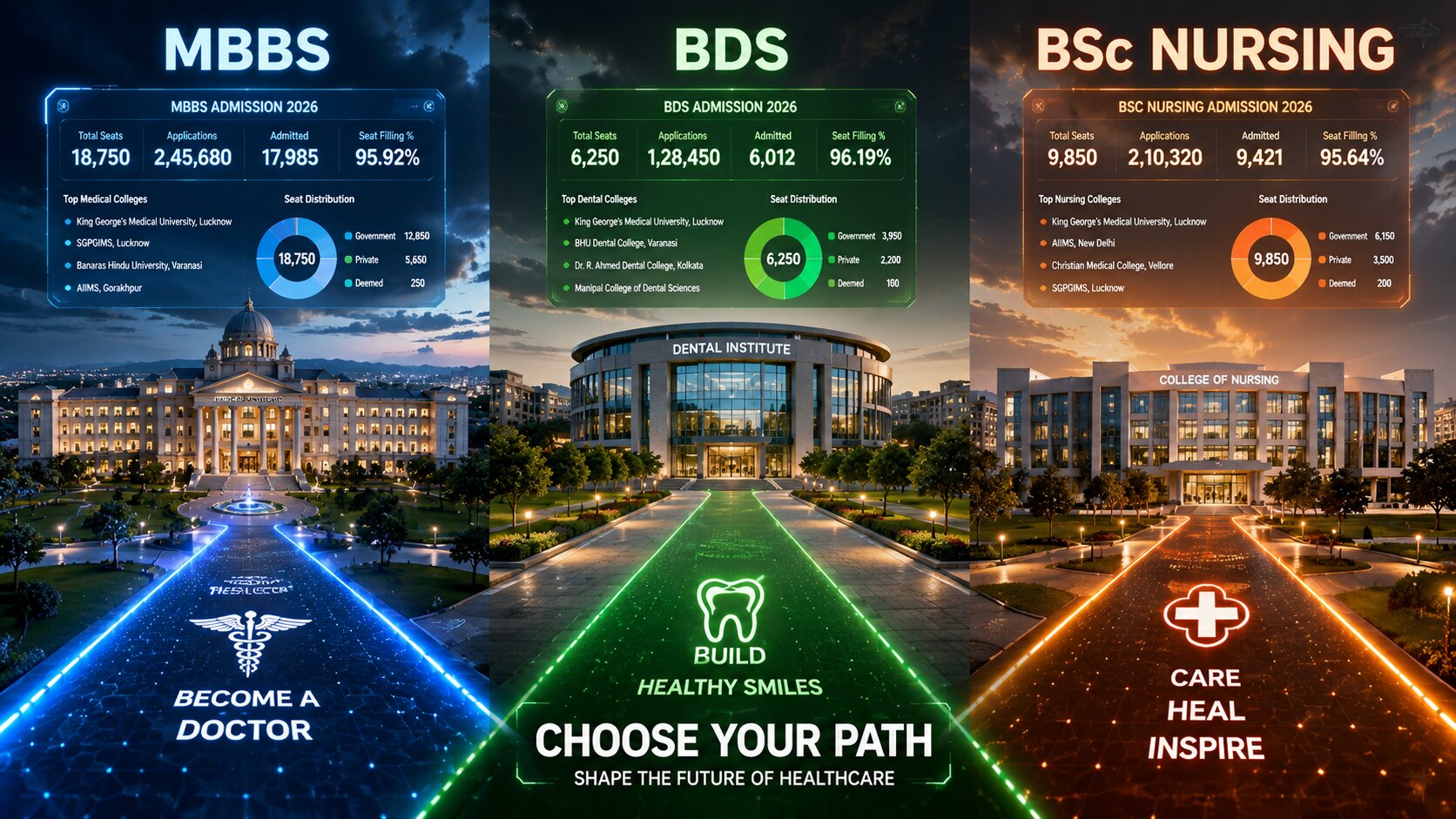
MBBS admissions in India are conducted through NEET UG.
Visit Official Website : NEET UG
Candidates must:
- Qualify NEET UG
- Participate in counselling
- Meet eligibility criteria
Admissions are conducted through:
- All India Quota
- State Quota
- Deemed University Counselling
BDS Admission
BDS admissions are also conducted through NEET UG.
Candidates participate in counselling similar to MBBS admissions.
The admission framework follows official NEET-based procedures.
BSc Nursing Admission
BSc Nursing admissions vary depending on institution and admission authority.
Many institutions use:
- Entrance examinations
- Merit-based admissions
- Nursing-specific admission procedures
Admission requirements differ among institutions.
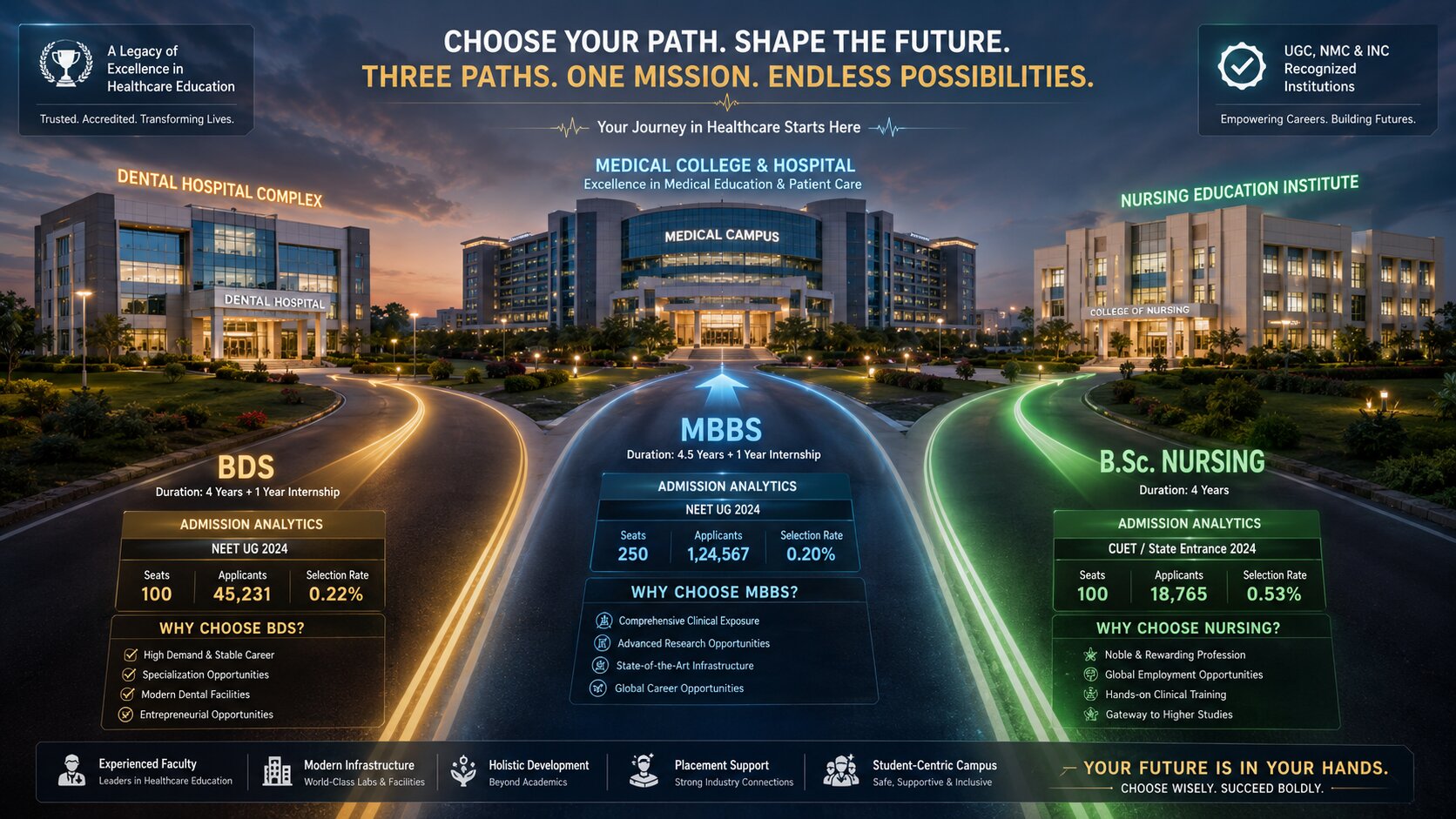
Course Duration Comparison
One of the biggest differences.
| Course | Duration |
|---|---|
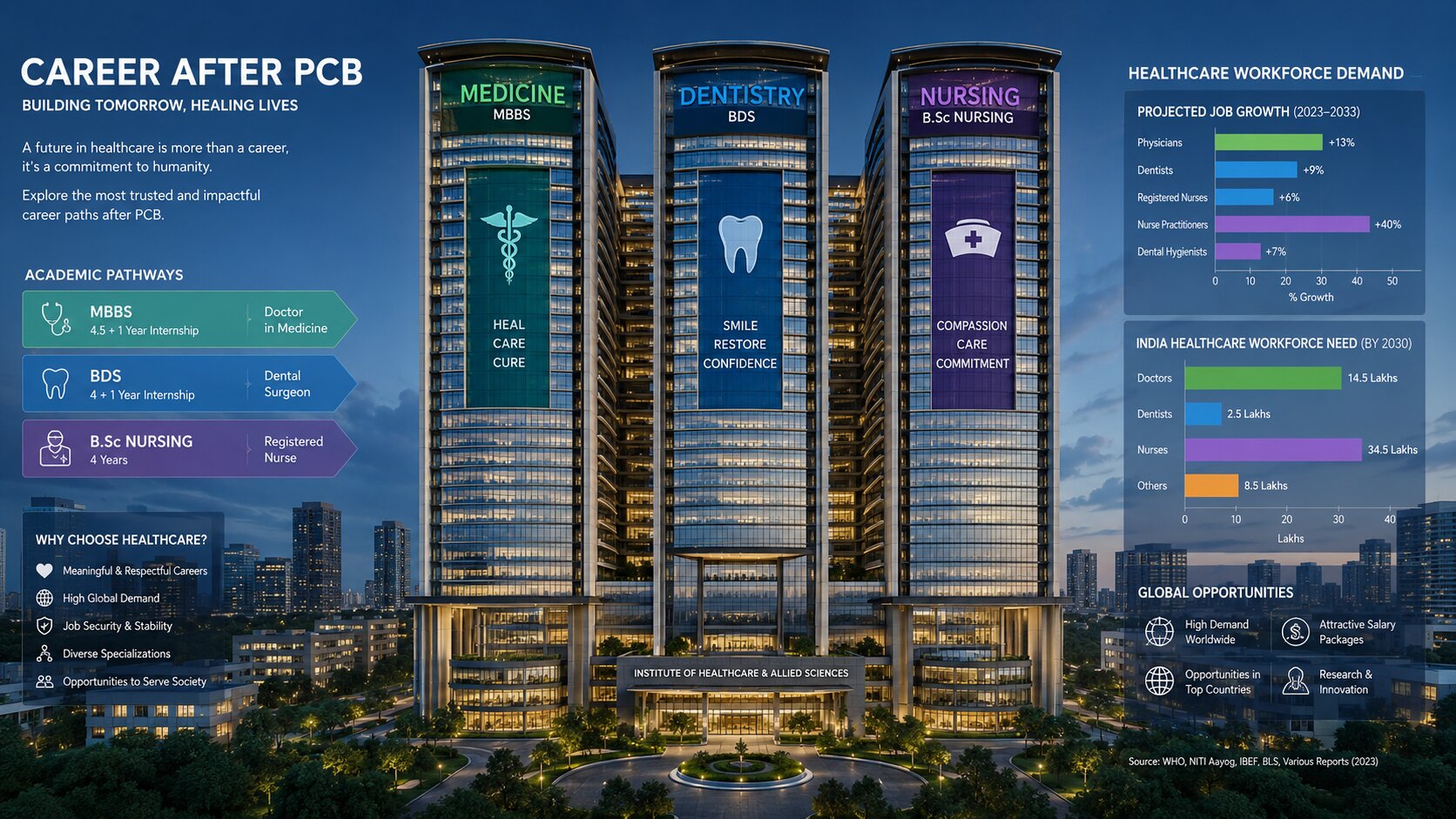
| MBBS | 5.5 Years (Including Internship) |
| BDS | 5 Years (Including Internship) |
| BSc Nursing | 4 Years |
BSc Nursing generally allows students to enter the workforce earlier.
MBBS Course Overview
MBBS is the primary medical degree in India.
Students study:
- Anatomy
- Physiology
- Biochemistry
- Pathology
- Pharmacology
- Surgery
- Medicine
Clinical training forms a major component of the course.
BDS Course Overview
BDS focuses on dental sciences.
Students learn:
- Oral Medicine
- Dental Surgery
- Orthodontics
- Prosthodontics
- Periodontics
The program prepares graduates for dental practice and oral healthcare services.
BSc Nursing Course Overview
BSc Nursing focuses on patient care and healthcare support.
Students study:
- Nursing Foundations
- Community Health
- Medical-Surgical Nursing
- Child Health Nursing
- Mental Health Nursing
Practical training remains an important part of the curriculum.
NEET Competition Comparison
Competition levels vary significantly.
MBBS
Highest competition.
BDS
Moderate to high competition.
BSc Nursing
Depends on institution and admission process.
Students with lower NEET scores often consider alternatives such as BDS and Nursing.
Academic Difficulty
All three courses require dedication.
MBBS
Extensive syllabus and clinical training.
BDS
Specialized dental education.
BSc Nursing
Strong practical and patient-care focus.
Each program demands serious commitment.
Clinical Exposure
Healthcare education depends heavily on practical training.
MBBS
Hospital rotations across departments.
BDS
Dental clinics and oral healthcare practice.
BSc Nursing
Patient care responsibilities and hospital training.
Clinical experience plays a crucial role in all three careers.
Know More : CLICK HERE
Career Scope After MBBS
MBBS graduates can pursue:
Clinical Practice
MD/MS Programs
Government Healthcare Services
Research
Hospital Administration
MBBS offers diverse career pathways.
Career Scope After BDS
BDS graduates may pursue:
Dental Practice
MDS Programs
Dental Hospitals
Teaching
Research
Dentistry continues to remain an important healthcare profession.
Career Scope After BSc Nursing
Nursing graduates can pursue:
Staff Nurse Roles
Government Nursing Positions
Hospital Careers
Teaching
Public Health
International Opportunities
Demand for trained nurses remains strong globally.
Global Opportunities
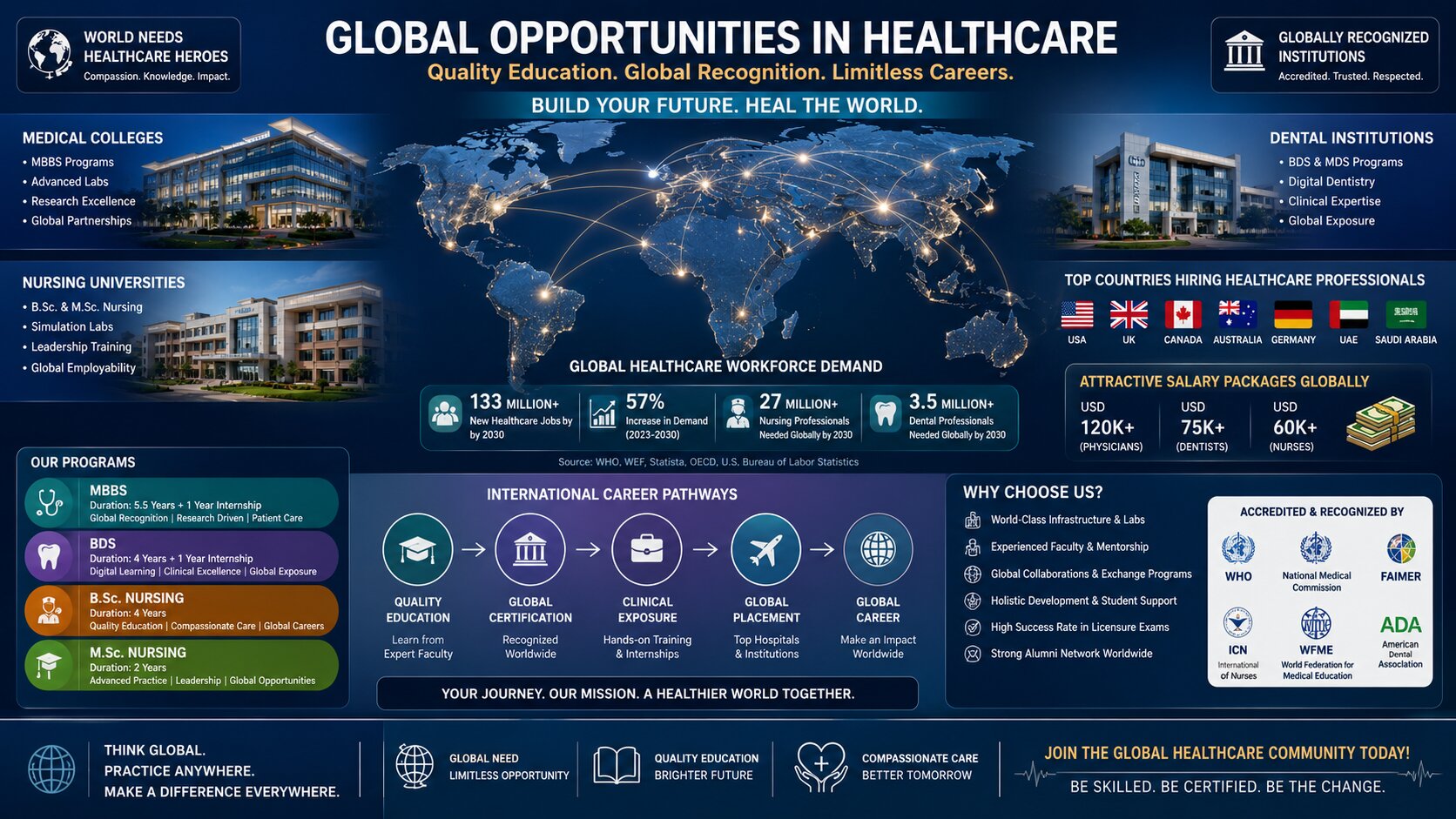
One major advantage of nursing is international demand.
Many countries continue recruiting qualified nursing professionals.
Healthcare workforce shortages worldwide have increased demand for trained nurses.
Government Job Opportunities
All three professions offer government employment pathways.
MBBS
Government hospitals and healthcare programs.
BDS
Government dental services.
Nursing
Government hospitals and public health systems.
Government opportunities remain highly competitive.
Higher Education Options
After MBBS
Students commonly pursue:
- MD
- MS
- DNB
Specialization opportunities are extensive.
After BDS
Students often pursue:
- MDS
- Dental specializations
- Research programs
After BSc Nursing
Students may pursue:
- MSc Nursing
- Nurse Practitioner Programs
- Healthcare Management
- Public Health
Further education can significantly improve career prospects.
Cost of Education
Costs vary widely.
Government Institutions
Generally more affordable.
Private Institutions
Higher tuition expenses.
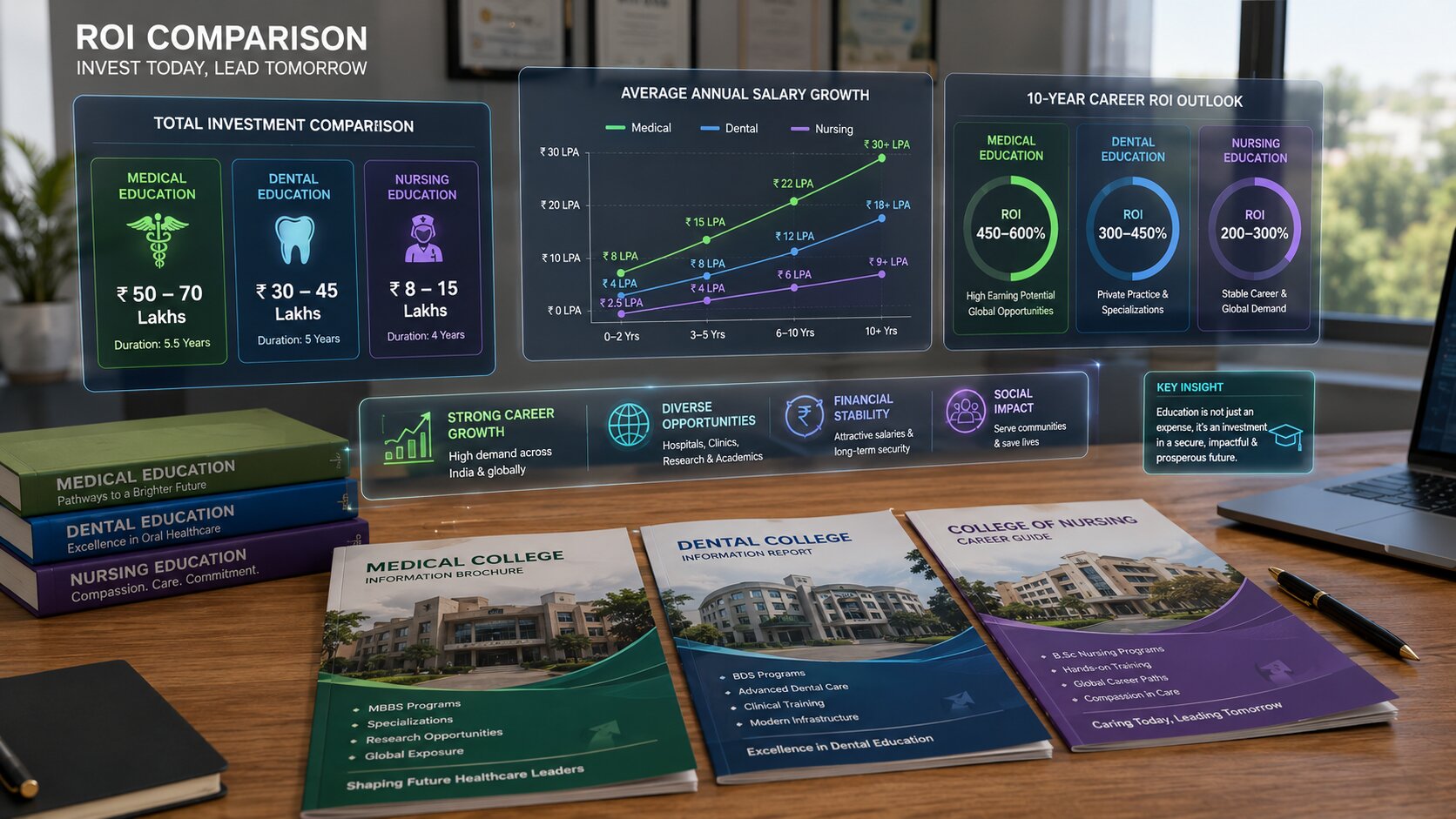
Students should evaluate total educational investment carefully.
Work Environment Comparison
MBBS
Hospitals, clinics and healthcare centers.
BDS
Dental clinics and hospitals.
Nursing
Hospitals, healthcare facilities and community health services.
Work responsibilities differ substantially.
Work-Life Balance
Career experiences vary.
Some medical specialties involve demanding schedules.
Dental practice may offer different working patterns.
Nursing schedules often include shifts and patient-care responsibilities.
Students should understand lifestyle expectations before choosing a career.
Skills Required
MBBS
Decision-making and medical knowledge.
BDS
Precision and manual skills.
Nursing
Patient care and communication.
Each profession requires unique strengths.
Visit Our Official Portal : CLICK HERE
Who Should Choose MBBS?
MBBS may suit students who:
- Want to become physicians.
- Enjoy medical sciences.
- Are prepared for long training periods.
- Want broad medical career options.
Who Should Choose BDS?
BDS may suit students who:
- Prefer dental sciences.
- Enjoy procedural healthcare work.
- Want specialized practice opportunities.
Who Should Choose BSc Nursing?
BSc Nursing may suit students who:
- Enjoy patient care.
- Want earlier workforce entry.
- Seek healthcare careers with global demand.
- Prefer practical healthcare environments.
Common Mistakes Students Make
Choosing Only Based on Status
Interest matters.
Ignoring Course Structure
Students should understand daily responsibilities.
Following Friends
Career choices should be personal.
Looking Only at Initial Earnings
Long-term growth matters.
Not Researching Career Paths
Understanding future opportunities is essential.
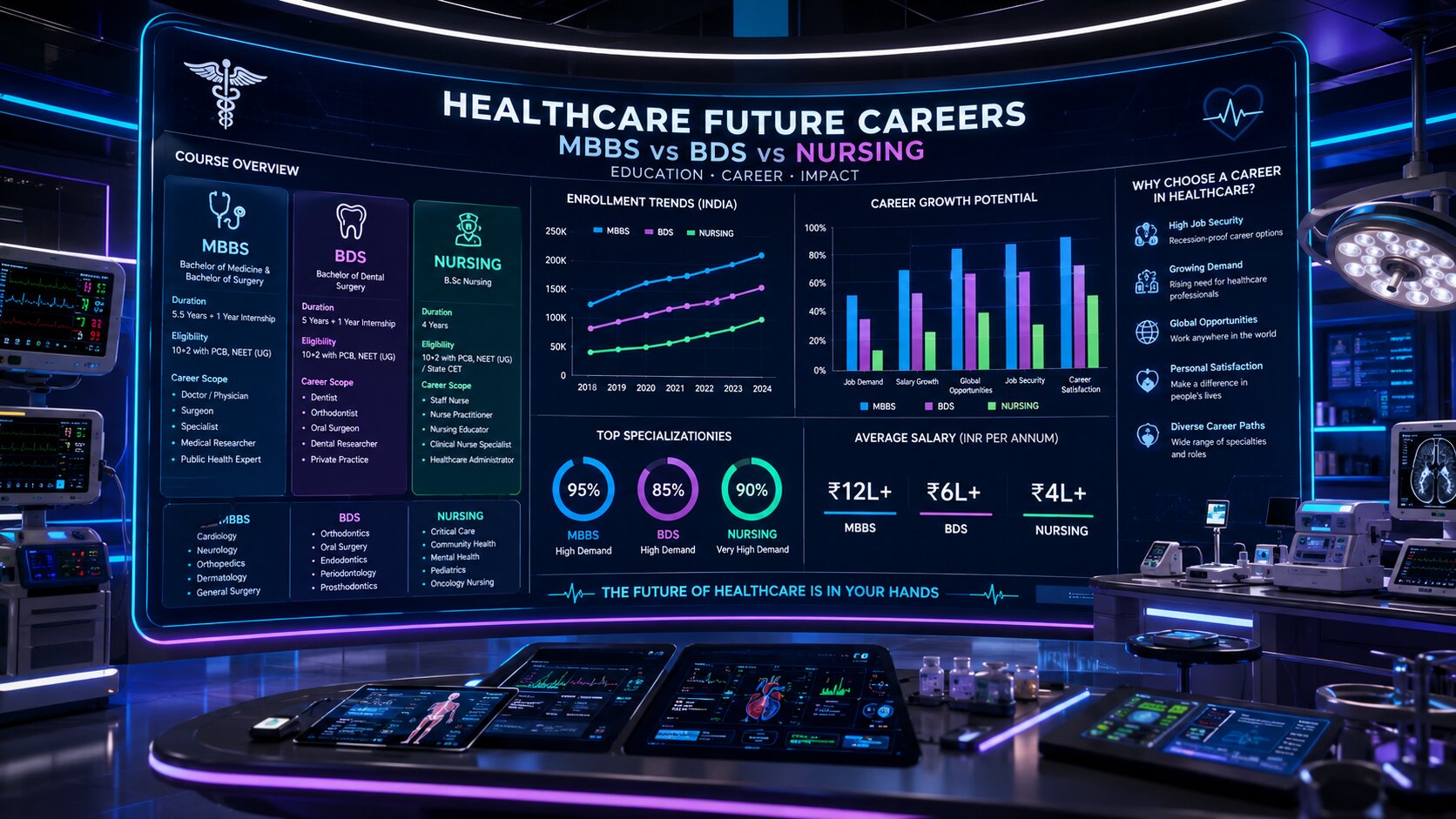
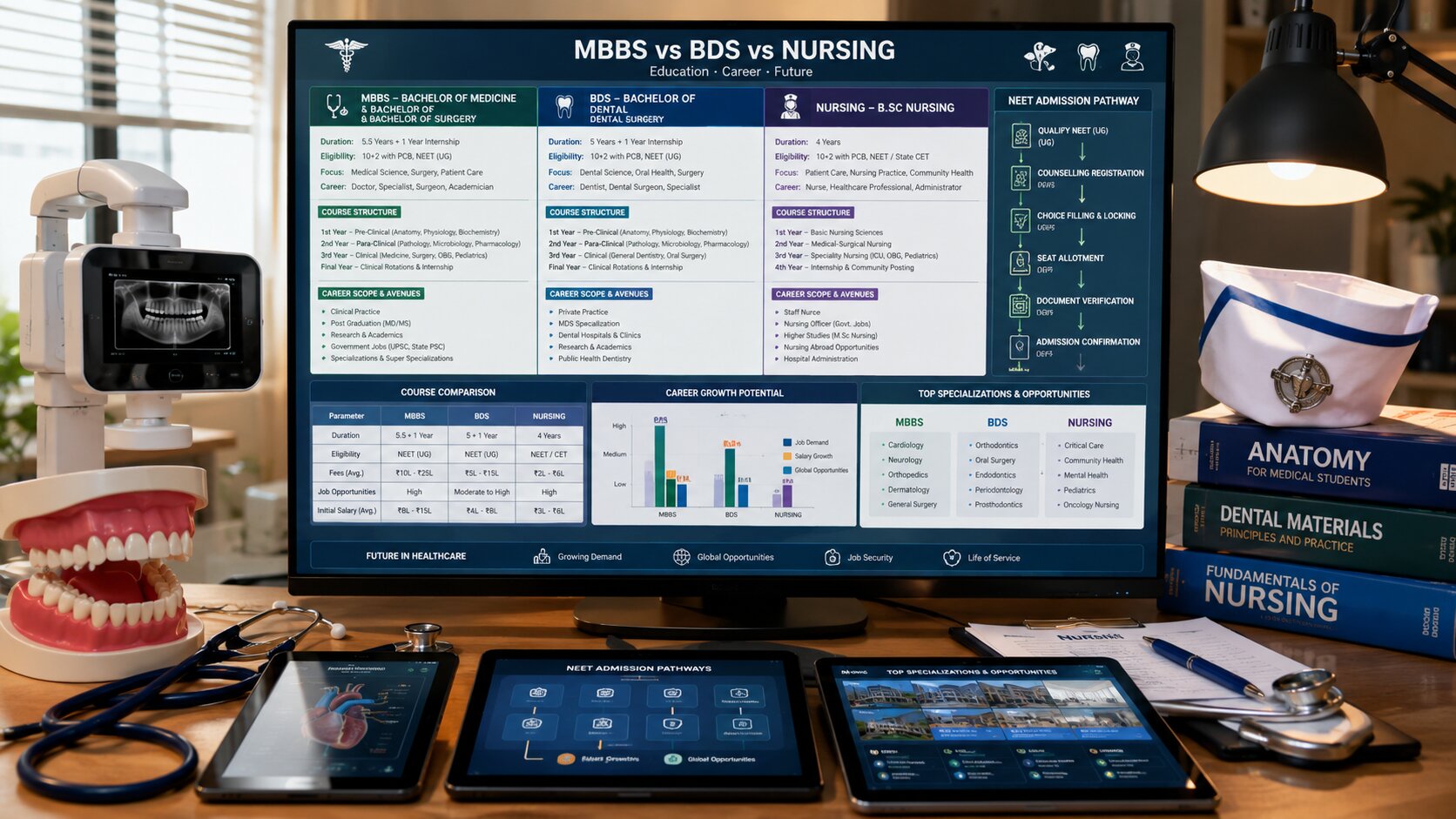
Quick Comparison Table
| Factor | MBBS | BDS | BSc Nursing |
|---|---|---|---|
| Main Focus | Medicine | Dentistry | Nursing Care |
| Admission | NEET UG | NEET UG | Institution Specific |
| Duration | 5.5 Years | 5 Years | 4 Years |
| Clinical Exposure | Very High | High | High |
| Government Opportunities | Yes | Yes | Yes |
| Higher Studies Options | Extensive | Strong | Strong |
| Global Demand | High | Moderate | Very High |
Final Verdict
There is no universally “best” option among MBBS, BDS and BSc Nursing.
Choose MBBS If
You want to become a medical doctor and are prepared for extensive training and competition.
Choose BDS If
You are interested in dental sciences and specialized oral healthcare.
Choose BSc Nursing If
You want a healthcare career with strong practical exposure, growing global demand and earlier entry into the workforce.
Browse More Latest Posts :
Best MBBS Colleges in Uttar Pradesh 2026: Government and Private Medical Colleges
Best Career Options for the Next 5 Years (2026–2030): Top Future Careers
All three professions contribute significantly to healthcare systems. The best choice depends on your interests, career goals, academic strengths and long-term aspirations rather than public perception alone.
A well-informed decision today can shape a rewarding healthcare career for decades to come.
Pingback: Best AYUSH Colleges in India 2026: BAMS, BHMS, BUMS