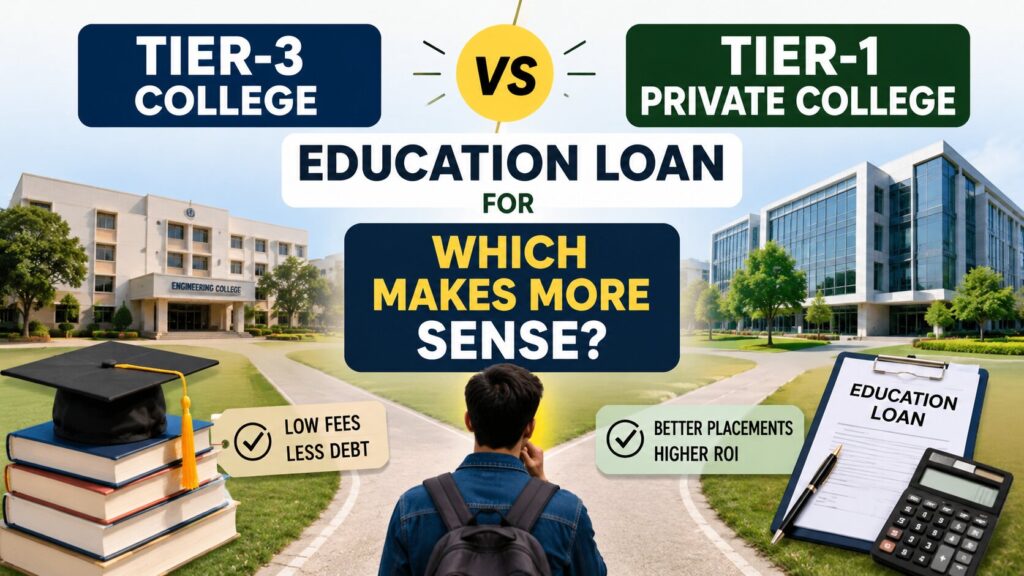
Tier-3 College vs Education Loan for Tier-1 Private College: Which Is Better in 2026?
One of the biggest dilemmas faced by engineering aspirants after entrance exam results is deciding whether to:- Join a nearby Tier-3 college with low fees, or
- Take an education loan and study at a reputed Tier-1 private college.
Find Your Perfect College Match Today : CLICK HERE
Students often ask: “Should I save money and join a Tier-3 college, or invest in a better college through an education loan?” The answer depends on several factors including placements, branch, career goals, financial condition and willingness to work hard. This article compares both options in detail.Understanding College Tiers
Before comparing, let’s understand what these tiers generally mean.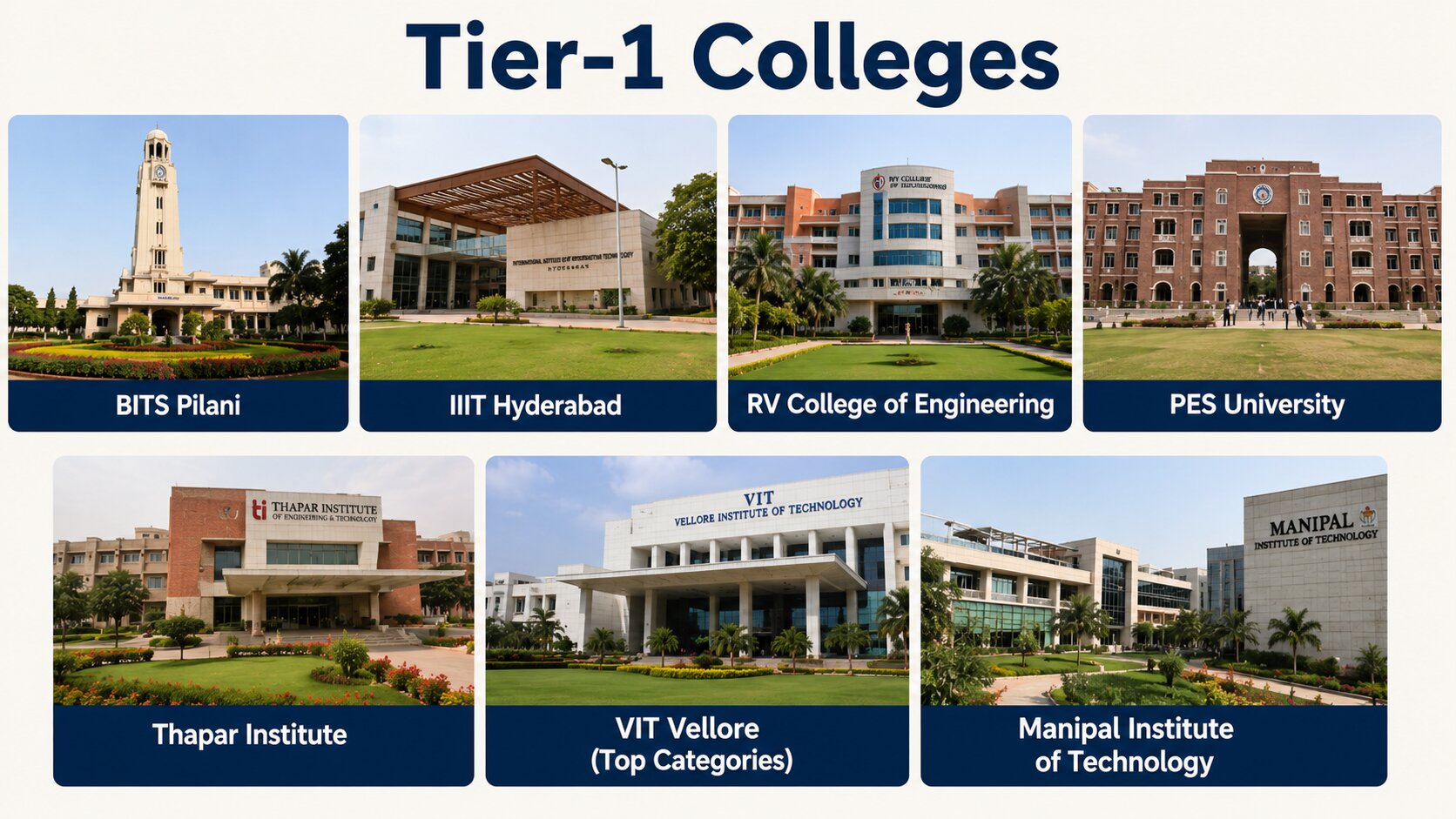 Examples include:
- BITS Pilani (CLICK HERE)
- IIIT Hyderabad (CLICK HERE)
- RV College of Engineering
- PES University (CLICK HERE)
- Thapar Institute (CLICK HERE)
- VIT Vellore (Top Categories) (CLICK HERE)
- Manipal Institute of Technology (CLICK HERE)
Common Features
- Strong placements
- Better industry exposure
- Better peer group
- Strong alumni network
- Better internship opportunities
Tier-3 Colleges
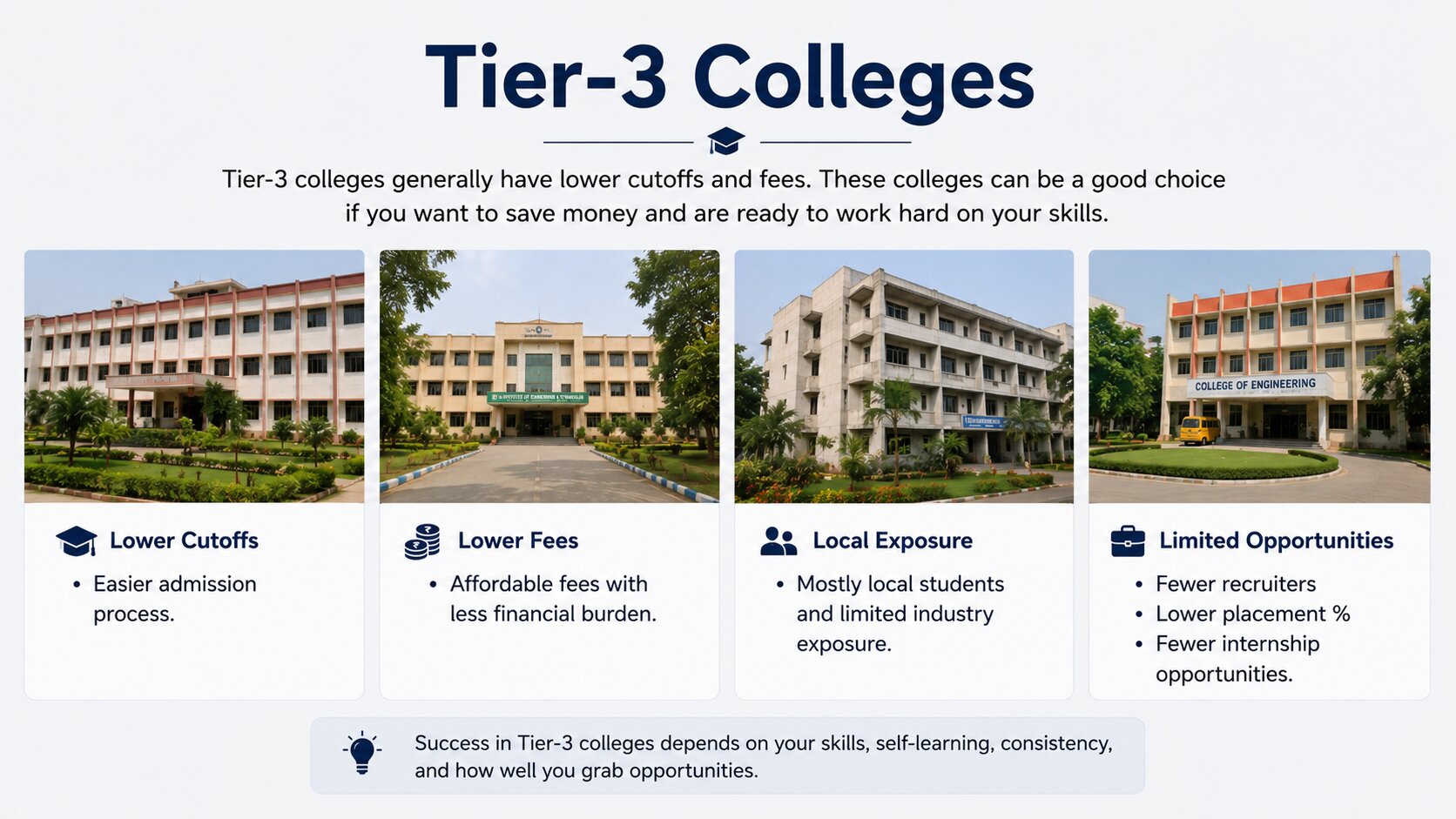 Generally these colleges have:
- Lower cutoffs
- Lower fees
- Local student population
- Limited recruiter participation
- Fewer internship opportunities
Cost Comparison
One of the biggest deciding factors is cost.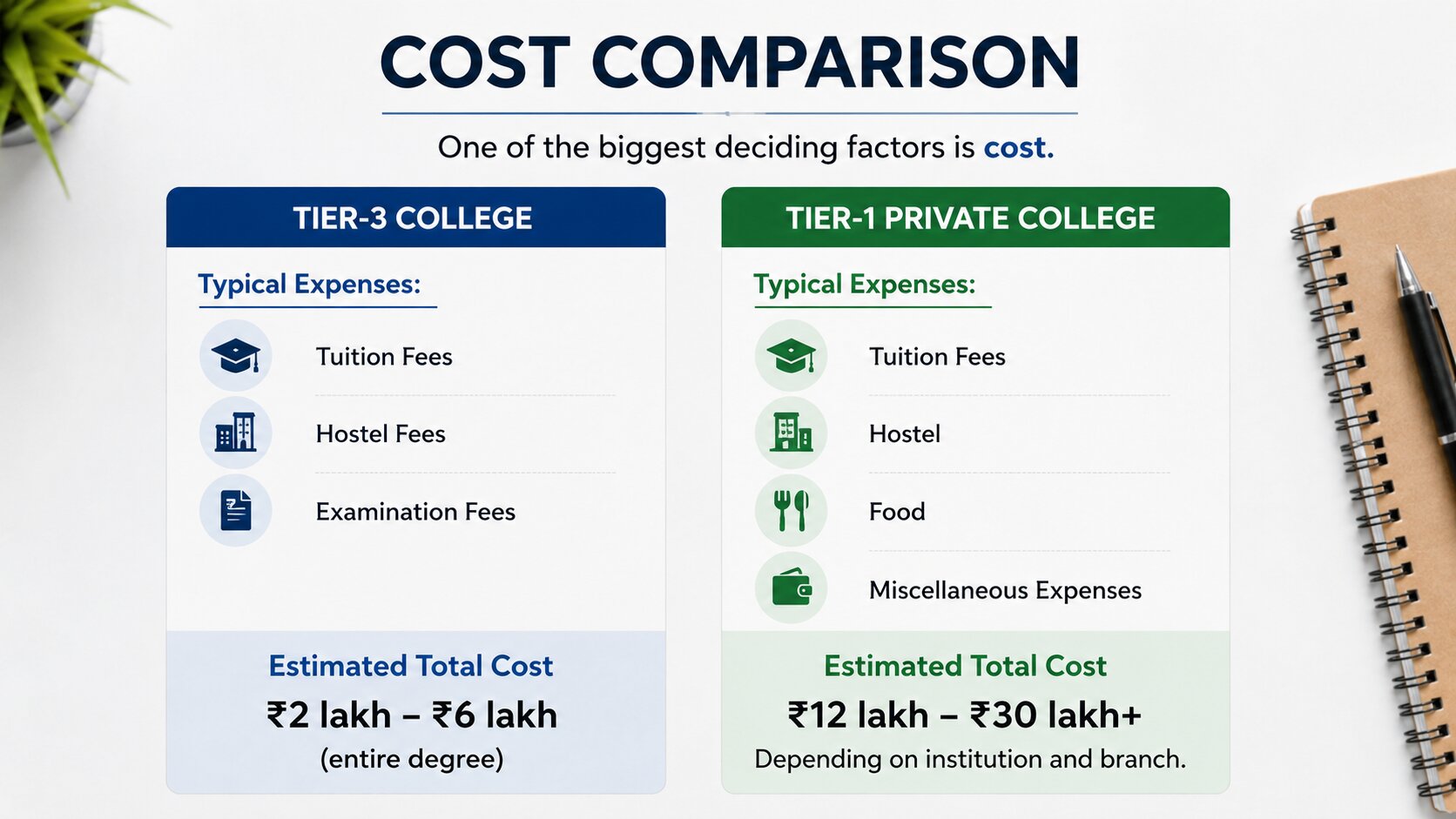
Tier-3 College
Typical Expenses:- Tuition Fees
- Hostel Fees
- Examination Fees
- ₹2 lakh – ₹6 lakh (entire degree)
Tier-1 Private College
Typical Expenses:- Tuition Fees
- Hostel
- Food
- Miscellaneous Expenses
- ₹12 lakh – ₹30 lakh+
What Is an Education Loan?
An education loan allows students to finance:- Tuition fees
- Hostel expenses
- Academic expenses
Why Students Consider Tier-1 Colleges
There are several advantages.1. Better Placement Opportunities
Top recruiters visit regularly. Examples- Microsoft
- Amazon
- Adobe
- Deloitte
- Accenture
2. Stronger Peer Group
Students are often surrounded by highly motivated classmates. This creates a competitive learning environment.3. Better Internships
Top colleges usually attract:- Internship drives
- Industry projects
- Startup opportunities
4. Strong Alumni Network
Alumni often help students through:- Referrals
- Mentorship
- Career guidance
Advantages of Tier-3 Colleges
Tier-3 colleges also offer some benefits.1. Lower Financial Burden
Students graduate with little or no debt.2. Less Financial Stress
Families may feel more comfortable financially.3. Opportunity to Self-Learn
Today, skills can be learned through:- Online courses
- Internships
- Open-source projects
Placement Comparison
This is where the biggest difference often appears.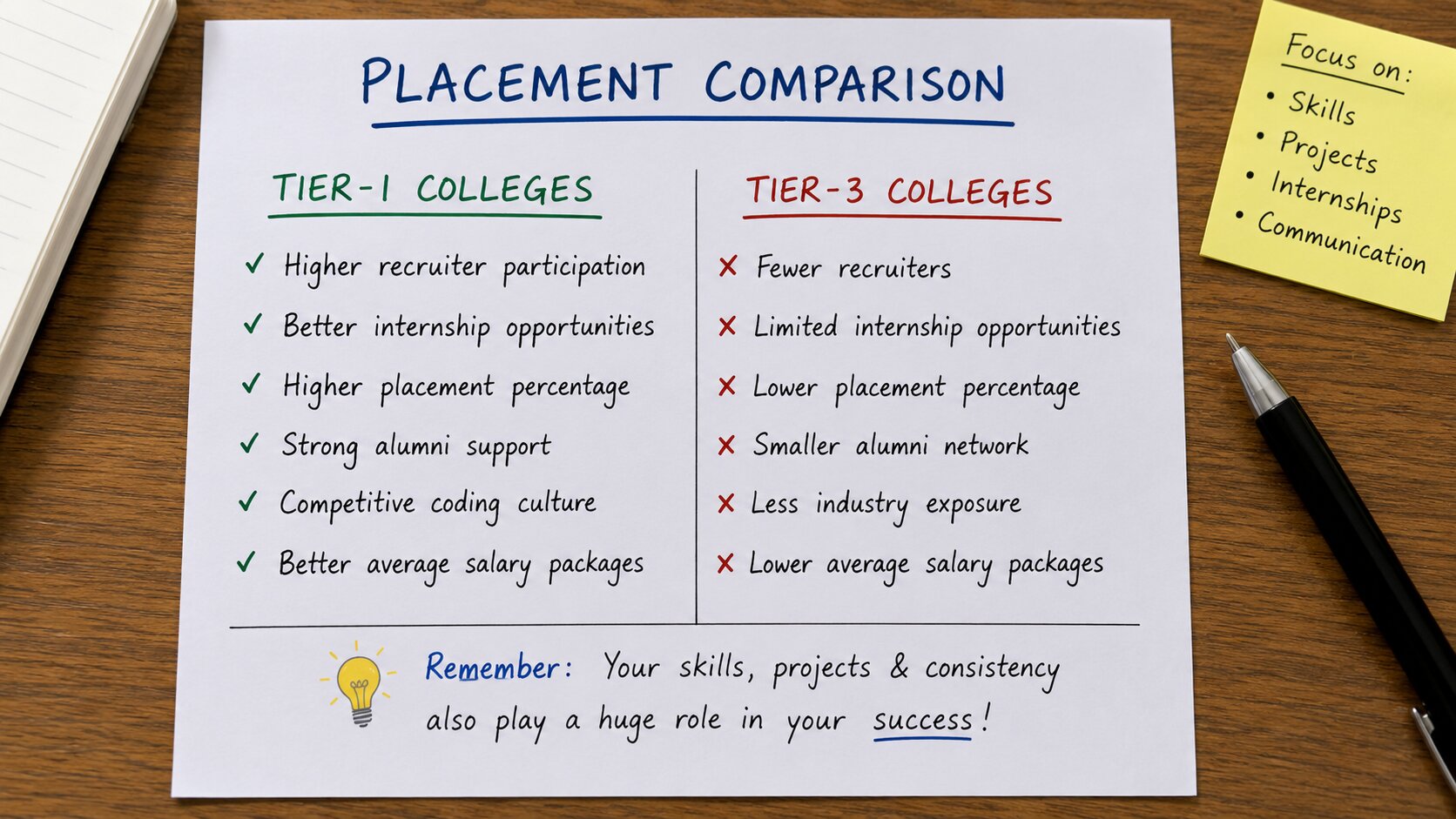
Typical Tier-1 Placement Ecosystem
Benefits include:- Higher Recruiter Participation
- Better Internship Access
- Strong Alumni Support
- Competitive Coding Culture
Typical Tier-3 Placement Ecosystem
Challenges may include:- Fewer Recruiters
- Lower Placement Percentage
- Limited Internship Opportunities
- Smaller Industry Network
Does College Brand Matter?
The answer is:Yes, Initially
A strong college brand can:- Increase interview opportunities
- Improve internship access
- Attract recruiters
No, Long-Term
After several years of experience:- Skills matter more
- Work experience matters more
- Career achievements matter more
ROI: Return on Investment
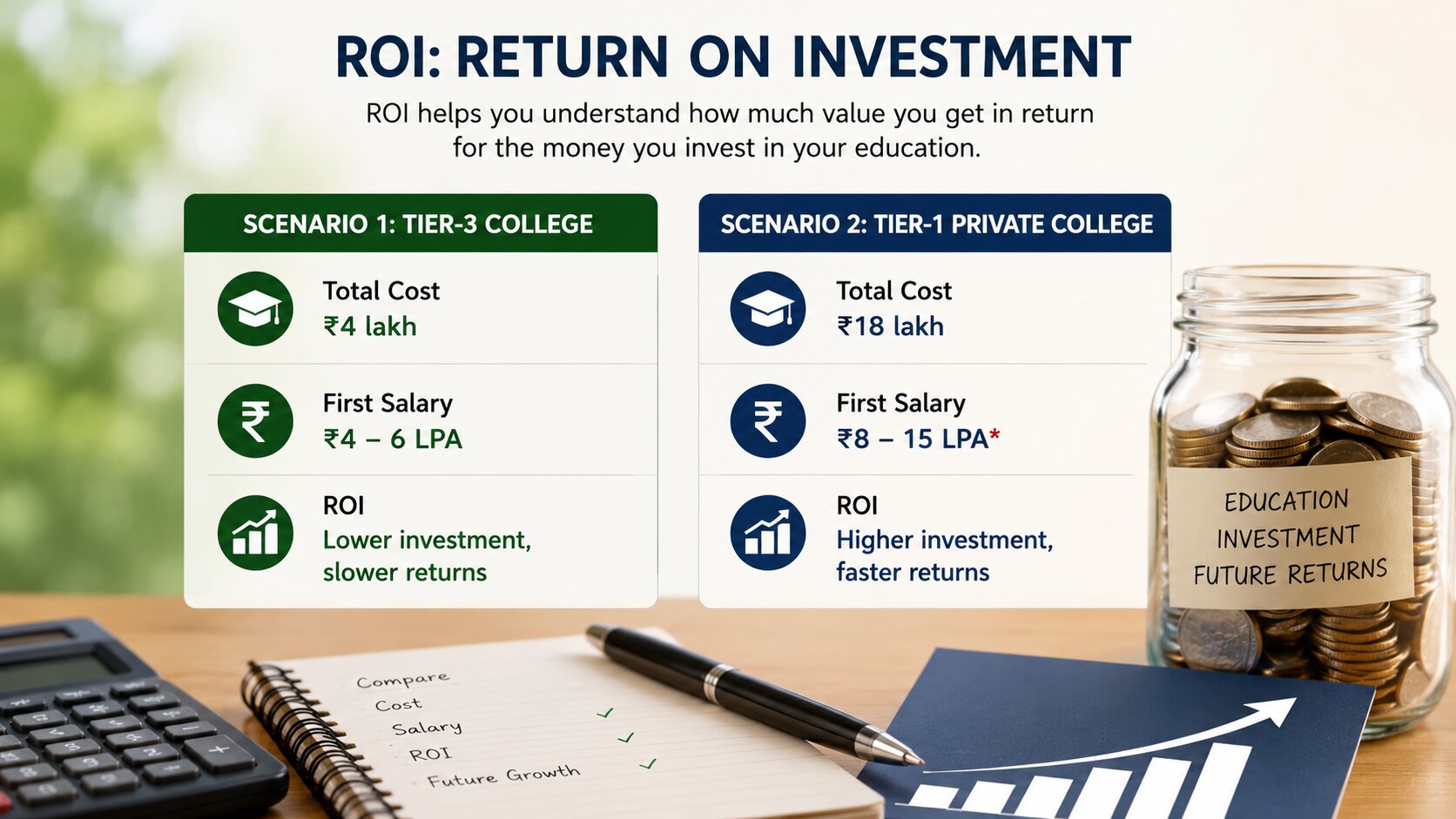 ROI should be a major consideration.
Scenario 1
Tier-3 College
Total Cost:- ₹4 lakh
- ₹4–6 LPA
Scenario 2
Tier-1 Private College
Total Cost:- ₹18 lakh
- ₹8–15 LPA (varies significantly)
When Taking an Education Loan Makes Sense
An education loan may be worthwhile if:1. College Has Strong Placements
Verify placement reports.2. You Are Getting a High-Demand Branch
Examples:- Computer Science
- AI & ML
- Data Science
- Information Technology
3. Family Cannot Afford Full Fees
The loan bridges the gap.4. You Are Willing to Work Hard
College alone does not guarantee success.When Tier-3 College May Be Better
Tier-3 colleges can be a smart choice when:1. The Tier-1 Option Is Extremely Expensive
Debt becomes too risky.2. Family Finances Are Under Significant Pressure
Financial stability is important.3. You Have Strong Self-Learning Ability
Many students secure excellent jobs through self-effort.4. You Plan for Government Exams
College brand may matter less.Skills Matter More Than Ever
The job market is changing rapidly. Companies increasingly evaluate:- Coding Skills
- Projects
- Internships
- Problem Solving
- Communication Skills
- Portfolio
Common Myths
Myth 1
Tier-3 students cannot get high-paying jobs.Reality
Many students achieve excellent careers through skills and internships.Myth 2
Tier-1 college guarantees success.Reality
Students still need to work hard.Myth 3
Education loans are always bad.Reality
Loans can be valuable investments when used wisely.Questions to Ask Before Taking a Loan
- What is the total cost?
- What are the average placements?
- What is the median salary?
- What is the placement percentage?
- How strong is the alumni network?
- What are the repayment terms?
Visit Our Official Portal : CLICK HERE
Engineering Branch Matters Too
Sometimes branch selection is more important than college selection.High-Demand Branches
- Computer Science
- AI & Machine Learning
- Data Science
- Information Technology
- Cyber Security
Realistic Decision Matrix
Choose Tier-1 Private College If:
✓ Placement record is strong ✓ Branch is high-demand ✓ Education loan is manageable ✓ You want industry exposure ✓ ROI appears reasonableChoose Tier-3 College If:
✓ Debt would be excessive ✓ Family finances are strained ✓ You are comfortable self-learning ✓ You have alternative career plans ✓ ROI of Tier-1 option is weakCareer Growth After Graduation
Regardless of college, career growth depends on:- Technical Skills
- Internship Experience
- Networking
- Certifications
- Communication Skills
- Continuous Learning
Best Strategy for Students
If possible:Step 1
Compare fees carefully.Step 2
Compare placement reports.Step 3
Calculate total loan burden.Step 4
Evaluate branch options.Step 5
Analyze ROI.Step 6
Make a long-term decision.Frequently Asked Questions
1. Is It Worth Taking a Loan for a Tier-1 Private College?
It can be worthwhile if the college has strong placements and the loan amount is manageable.2. Can Tier-3 Students Get High Packages?
Yes. Students with strong skills, internships and projects can secure excellent opportunities.3. Which Matters More: College or Skills?
Skills ultimately matter more, but a better college can provide stronger opportunities initially.4. Is Education Loan Risky?
Any loan carries risk, but a well-planned education loan can be a valuable investment in your future.
Check Out More Articles
CUET UG 2026 Score Card Released: Check Result Now
Final Verdict
There is no universal answer to the Tier-3 vs Tier-1 college debate. For some students, taking an education loan for a reputed Tier-1 private college can provide access to stronger placements, better internships and a powerful professional network. For others, choosing a Tier-3 college while aggressively building skills, projects and internships may be the financially smarter choice. The best decision depends on your branch, financial situation, career goals and willingness to put in consistent effort. Before making a final choice, compare placement reports, calculate ROI and evaluate the long-term impact of any education loan. Remember: a great college can open doors, but your skills and dedication determine how far you ultimately go.Is It Worth Taking a Loan for a Tier-1 Private College?
It can be worthwhile if the college has strong placements and the loan amount is manageable.
Can Tier-3 Students Get High Packages?
Yes. Students with strong skills, internships and projects can secure excellent opportunities.
Which Matters More: College or Skills?
Skills ultimately matter more, but a better college can provide stronger opportunities initially.
Is Education Loan Risky?
Any loan carries risk, but a well-planned education loan can be a valuable investment in your future.