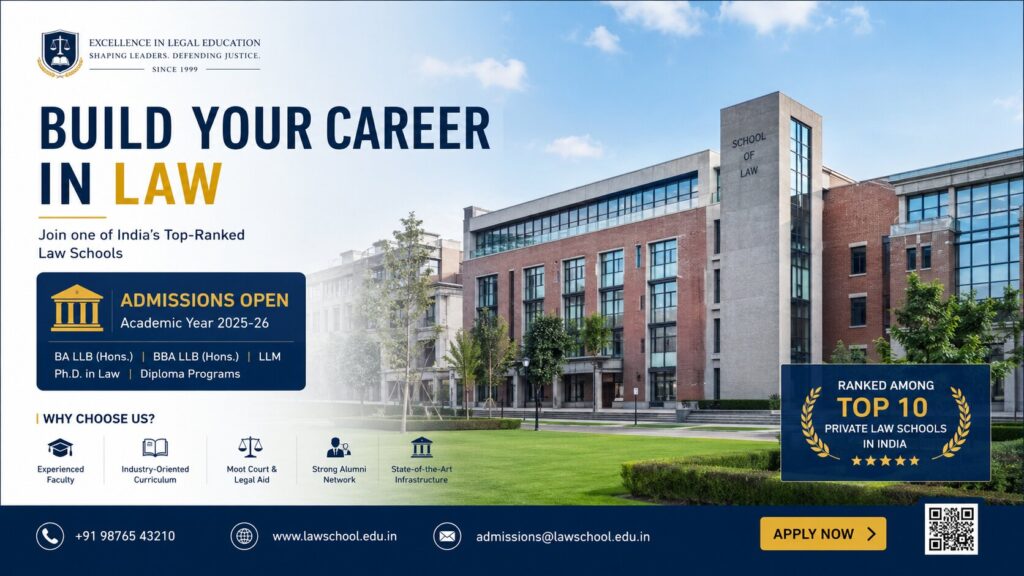
Top Private Law Colleges in India 2026: Fees, Admissions, Placements
Law has emerged as one of the most attractive professional career options in India. With growing opportunities in corporate law, litigation, arbitration, intellectual property, legal consulting and public policy, thousands of students now pursue law immediately after Class 12.
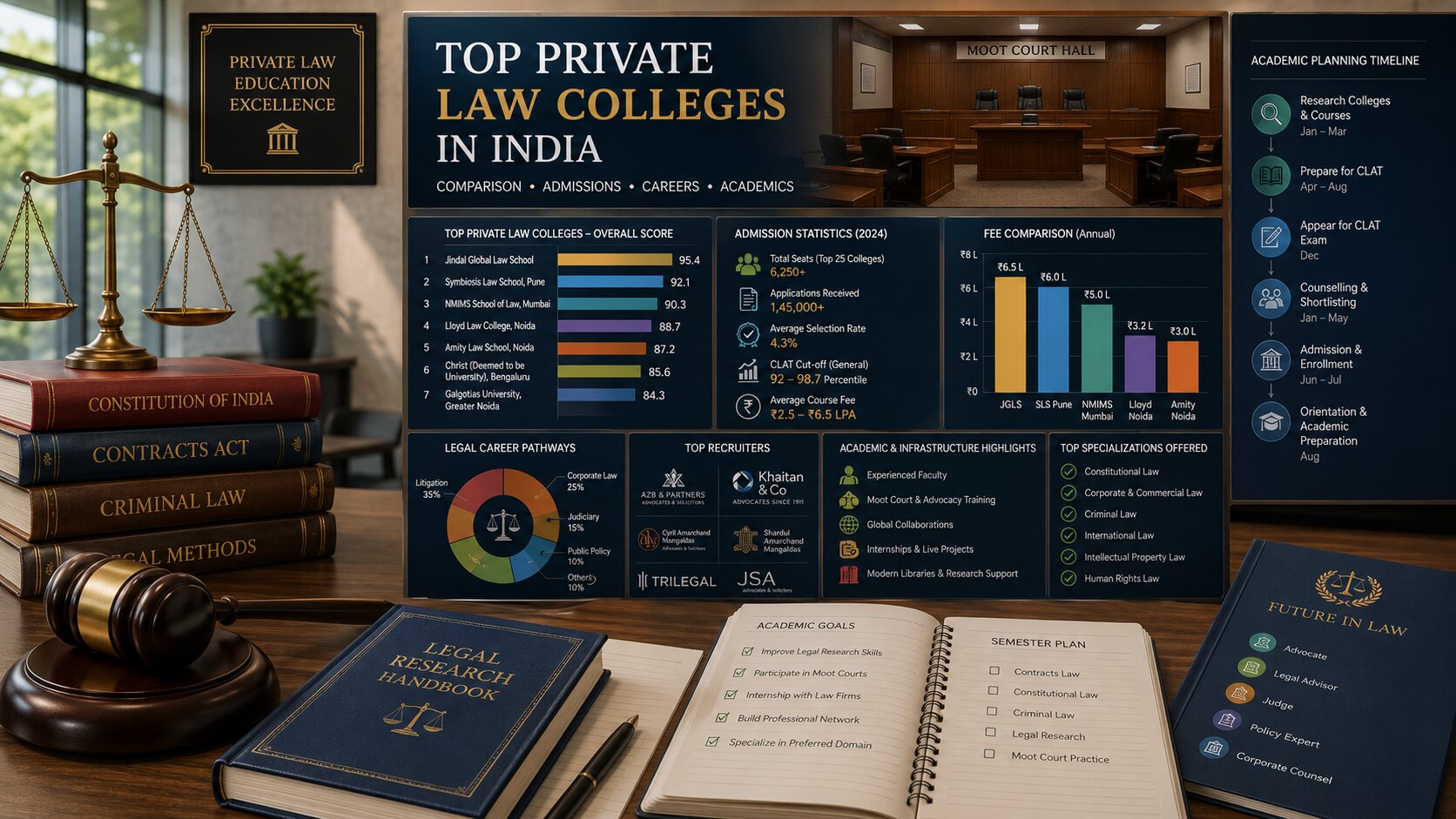
While National Law Universities (NLUs) receive significant attention, India’s top private law colleges have also developed strong academic reputations, modern infrastructure, industry-focused curricula and excellent placement opportunities.
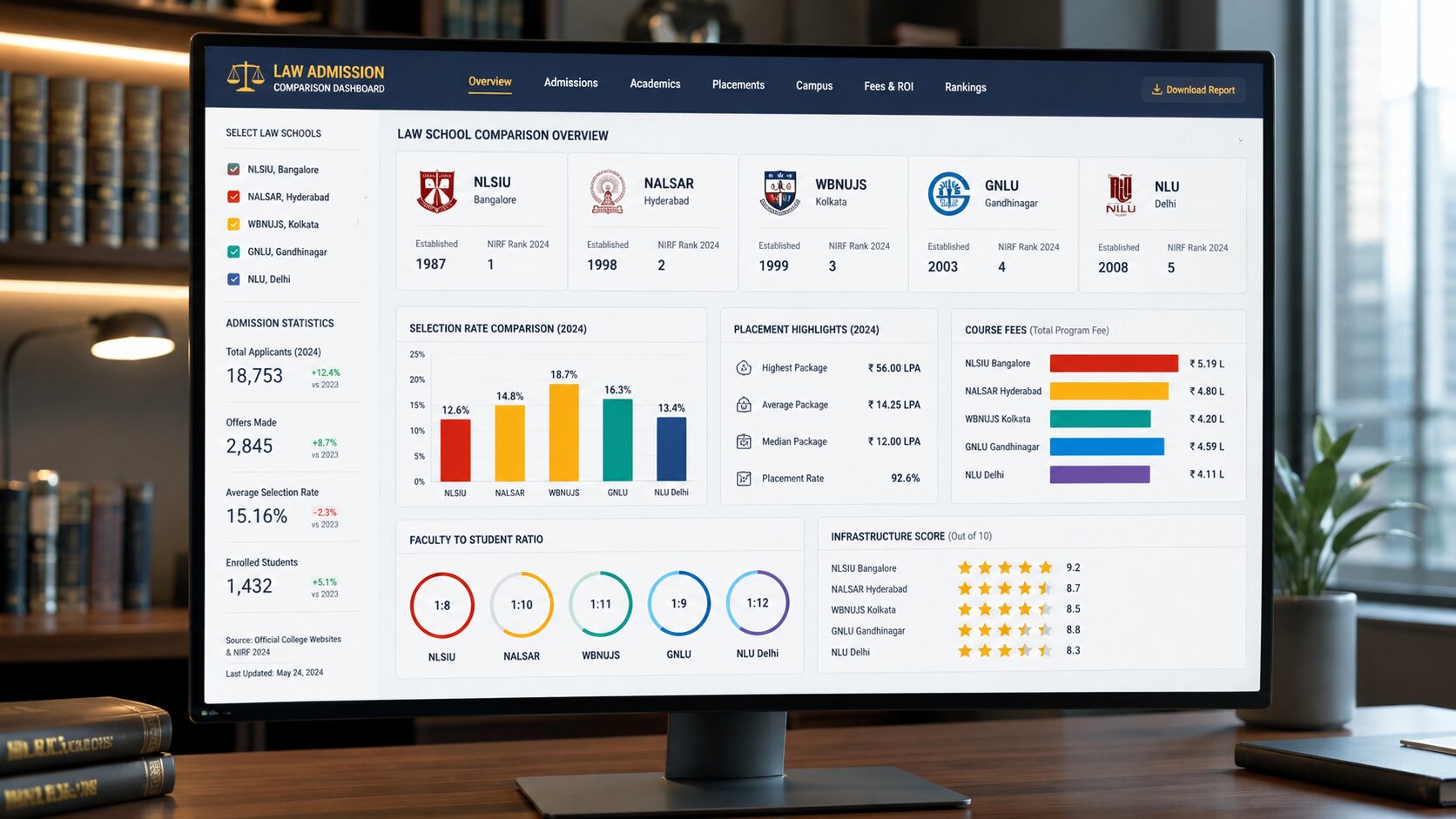
Find Your Perfect College Match Today : CLICK HERE
Many private law institutions now attract students from across the country and compete with leading public institutions in terms of faculty quality, internship exposure and recruiter participation.
This guide explores the top private law colleges in India for 2026, admission processes, fees, placement opportunities and factors students should consider before selecting a law school.
Why Private Law Colleges Are Becoming Popular
Over the last decade, private law institutions have invested heavily in:
- Modern campuses
- Digital libraries
- Moot court facilities
- International collaborations
- Internship support
- Industry engagement
As a result, many students now actively consider private law colleges alongside NLUs.
Several institutions have built strong reputations in corporate law, business law, dispute resolution and legal research.
How to Choose a Private Law College

Students should not choose a law college based only on rankings.
Important factors include:
Academic Reputation
Quality of teaching and curriculum.
Faculty
Experienced professors and legal practitioners.
Internship Opportunities
Access to courts, law firms and corporate organizations.
Placement Support
Career services and recruiter participation.
Moot Court Culture
Practical advocacy training.
Alumni Network
Professional connections after graduation.
Location
Access to legal and corporate opportunities.
Courses Offered by Private Law Colleges

Most leading institutions offer:
BA LLB (Hons)
Most popular integrated law programme.
BBA LLB (Hons)
Combines management and legal education.
BCom LLB
Business-focused legal studies.
LLB
Three-year law programme after graduation.
LLM
Postgraduate legal education.
Course availability varies by institution.
Symbiosis Law School, Pune

Visit Official Portal : CLICK HERE
One of India’s most recognized private law institutions.
Popular features include:
- Strong academic reputation
- Moot court participation
- Internship opportunities
- National student diversity
- Industry engagement
Admissions are generally conducted through institutional entrance procedures and admission policies.
The institution remains a preferred choice for students interested in corporate law careers.
Jindal Global Law School

Visit Official Portal : CLICK HERE
Jindal Global Law School has established itself as one of India’s leading private law schools.
Major strengths include:
- Global academic collaborations
- Research-oriented environment
- International faculty exposure
- Modern infrastructure
- Interdisciplinary education
The institution attracts students interested in both domestic and international legal careers.
ICFAI Law School

Visit Official Portal : CLICK HERE
ICFAI Law School has expanded its presence in legal education through structured academic programs and practical learning opportunities.
Key highlights include:
- Legal research emphasis
- Moot court activities
- Industry exposure
- Professional development initiatives
Students often consider it for integrated law programs and skill-based legal education.
UPES School of Law

Visit Official Portal : CLICK HERE
UPES School of Law has developed a niche through specialized legal education.
Popular areas include:
- Energy law
- Corporate law
- Technology law
- Intellectual property law
The institution focuses on industry-oriented legal training and practical exposure.
School of Law, Bennett University

Visit Official Portal : CLICK HERE
Bennett University has emerged as a growing destination for legal education.
Strengths include:
- Modern academic infrastructure
- Technology integration
- Industry interaction
- Contemporary legal curriculum
The institution emphasizes practical legal learning and professional readiness.
Alliance School of Law

Visit Official Portal : CLICK HERE
Alliance School of Law offers integrated and postgraduate legal programs.
Students often evaluate the institution for:
- Academic environment
- Moot court opportunities
- Industry interactions
- Legal skill development
The institution continues to attract students from multiple states.
Amity Law School

Visit Official Portal : CLICK HERE
Amity’s law programs remain among the most widely recognized private legal education offerings in India.
Key features include:
- Large academic ecosystem
- Legal research opportunities
- Student activities
- Moot court participation
- Professional networking opportunities
The institution maintains multiple law campuses across India.
What Makes a Good Law College?
Many students focus only on brand value.
However, a strong law school should provide:
Practical Exposure
Legal education requires practical learning.
Court Visits
Understanding judicial procedures.
Internships
Exposure to real legal work.
Moot Courts
Advocacy and legal argument practice.
Legal Aid Activities
Community-focused legal experience.
Importance of Internships
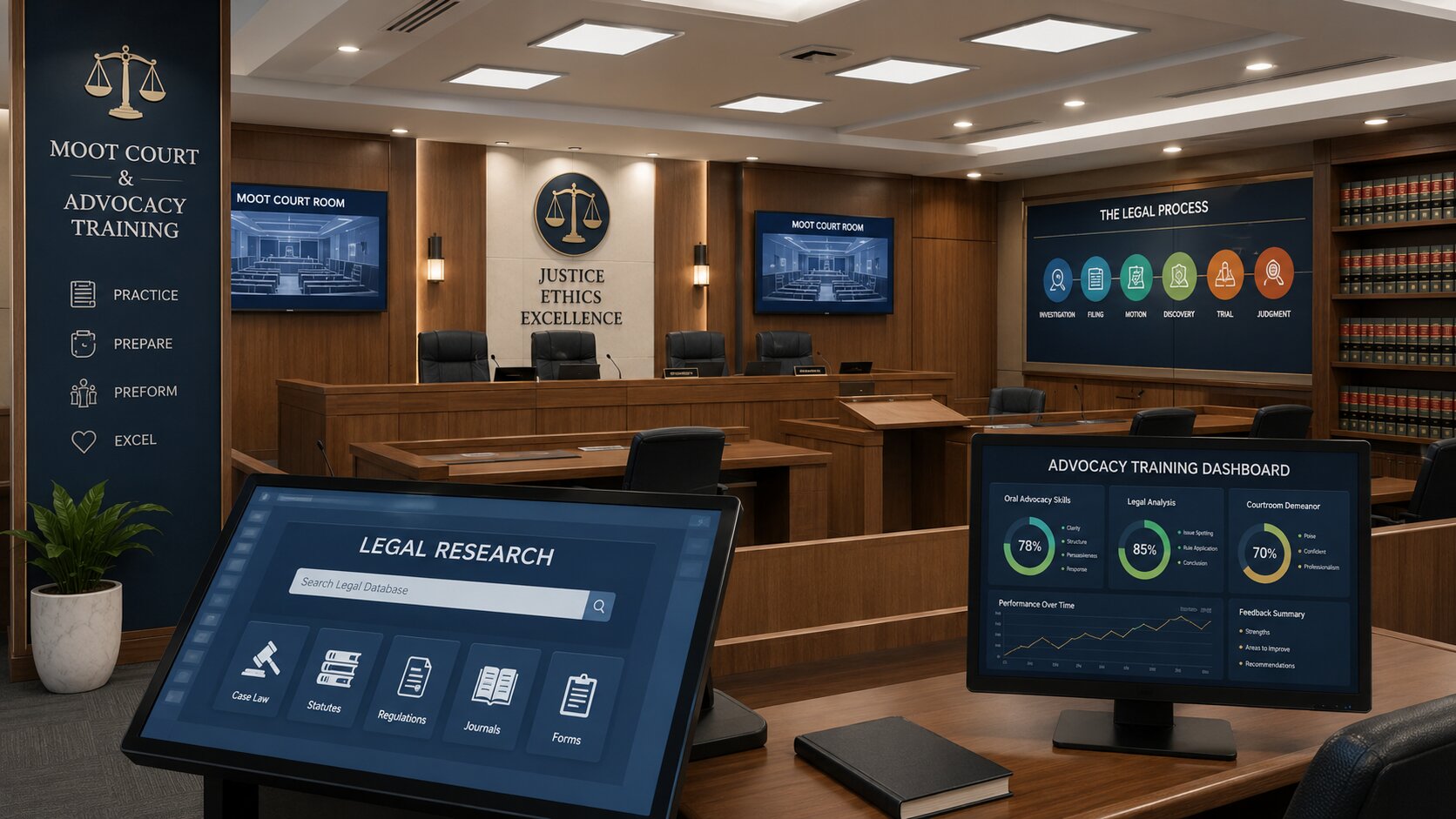
Internships are among the most important parts of legal education.
Students should evaluate:
- Internship support systems
- Law firm exposure
- Corporate legal opportunities
- Litigation experience
- Judicial internships
Strong internship opportunities often improve career outcomes significantly.
Moot Court Culture
Moot court activities help students develop:
- Research skills
- Advocacy abilities
- Public speaking
- Legal drafting
- Case analysis
Many top private law schools actively encourage participation in national and international moot court competitions.
Placement Opportunities in Private Law Colleges
Placement performance varies significantly across institutions.
Common recruiters include:
Law Firms
Corporate legal practice.
Companies
In-house legal departments.
Consulting Organizations
Regulatory and compliance roles.
Startups
Legal and policy functions.
Public Policy Organizations
Research and governance opportunities.
Students should focus on overall placement ecosystems rather than isolated salary figures.
Corporate Law Careers
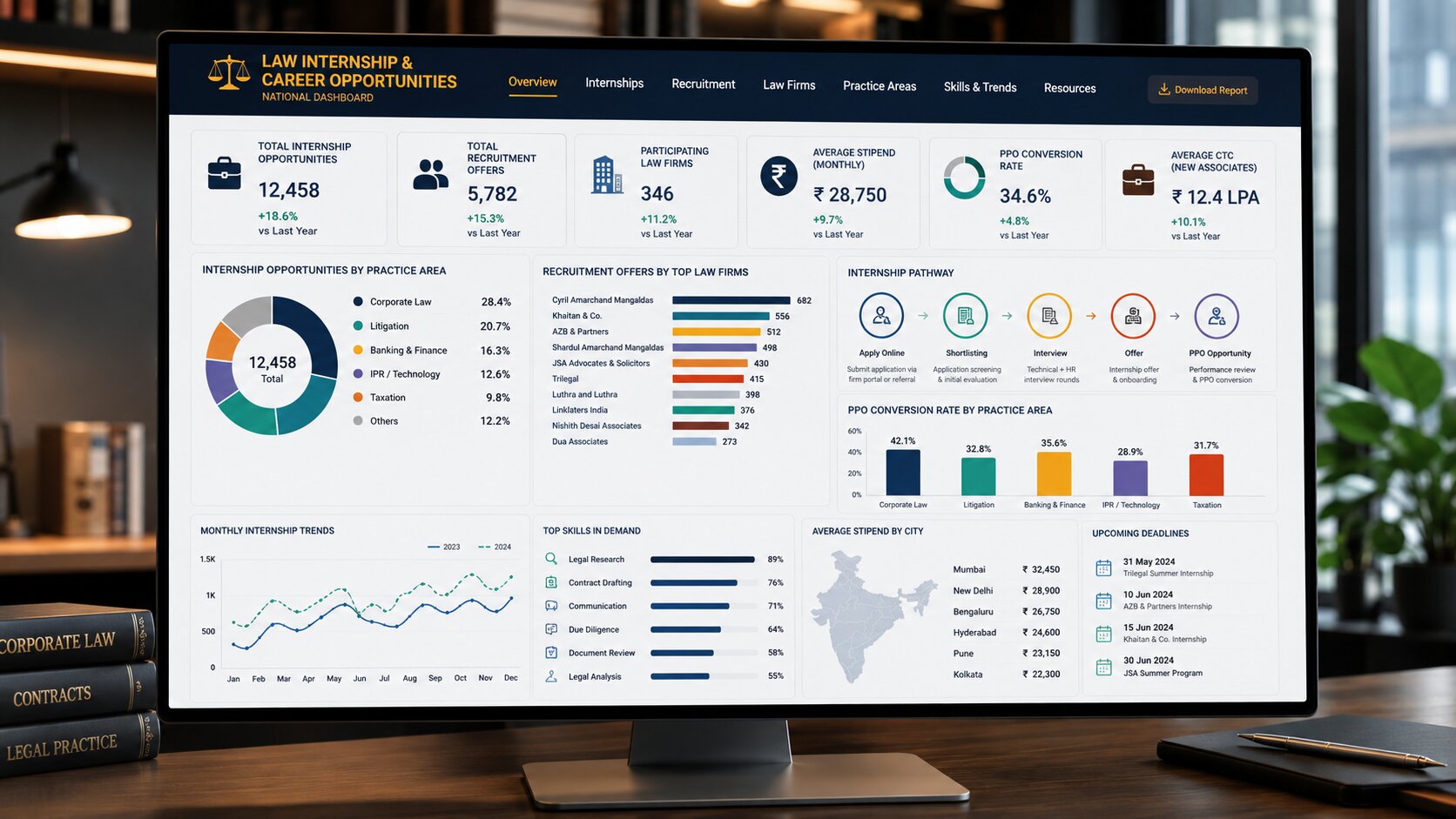
Corporate law remains one of the most sought-after legal career paths.
Common work areas include:
- Mergers and acquisitions
- Contracts
- Compliance
- Corporate governance
- Regulatory affairs
Several private law colleges have developed strong industry connections in this field.
Litigation Careers
Many students pursue litigation after graduation.
Important factors include:
- Court exposure
- Senior advocate internships
- Drafting practice
- Legal research experience
College support can influence early litigation opportunities.
Higher Studies Opportunities
Graduates often pursue:
LLM
Advanced specialization.
Judicial Services
State judicial examinations.
Academia
Teaching and research.
International Law Programs
Global legal education opportunities.
Students interested in higher studies should evaluate research resources carefully.
Private Law College Fees
Fee structures vary widely among institutions.
Factors influencing fees include:
- Infrastructure
- Academic facilities
- Residential facilities
- International collaborations
- Institutional policies
Students should evaluate total educational cost rather than tuition alone.
ROI in Legal Education

Return on Investment depends on:
- Fees
- Internship opportunities
- Placement support
- Alumni network
- Career growth
The most expensive institution is not always the best value.
Students should evaluate long-term outcomes.
Common Mistakes Students Make
Choosing Based Only on Rankings
Rankings provide guidance but not complete information.
Ignoring Internship Opportunities
Practical exposure is critical.
Ignoring Faculty Quality
Faculty significantly affects learning outcomes.
Focusing Only on Placements
Legal careers develop over many years.
Not Researching Specializations
Different colleges may have different strengths.

Visit Our Official Portal : CLICK HERE
Questions to Ask Before Taking Admission
- What courses are offered?
- What internship opportunities exist?
- How active is the moot court culture?
- What are the placement support systems?
- What legal specializations are available?
- What are the total costs?
- What hostel facilities are available?
These questions help students make informed decisions.
Future of Legal Education in India
Legal education continues to evolve rapidly.
Emerging areas include:
- Technology law
- Artificial intelligence regulation
- Data privacy law
- Cyber law
- Intellectual property
- International arbitration
Students should select institutions that adapt to these changing legal landscapes.
Browse More Latest Posts :
MBA Entrance Exams 2026 Compared: CAT vs CMAT vs State CET
CLAT 2026 Counselling Guide: NLU Seat Allotment, Documents, Admission Process
Final Verdict
Private law colleges in India have become increasingly competitive and now offer strong alternatives to traditional public institutions.
Institutions such as Symbiosis Law School, Jindal Global Law School, UPES School of Law, Bennett University, Alliance School of Law and Amity Law School have developed comprehensive legal education ecosystems that combine academics, practical learning and professional development.
Students should focus on:
- Academic quality
- Internship opportunities
- Moot court culture
- Faculty expertise
- Placement support
- Long-term career goals
The best law college is not necessarily the most famous one. It is the institution that provides the right combination of education, exposure and career opportunities aligned with a student’s aspirations.
Pingback: MHT CET Result out 2026: Scorecard, Percentile, Merit List